
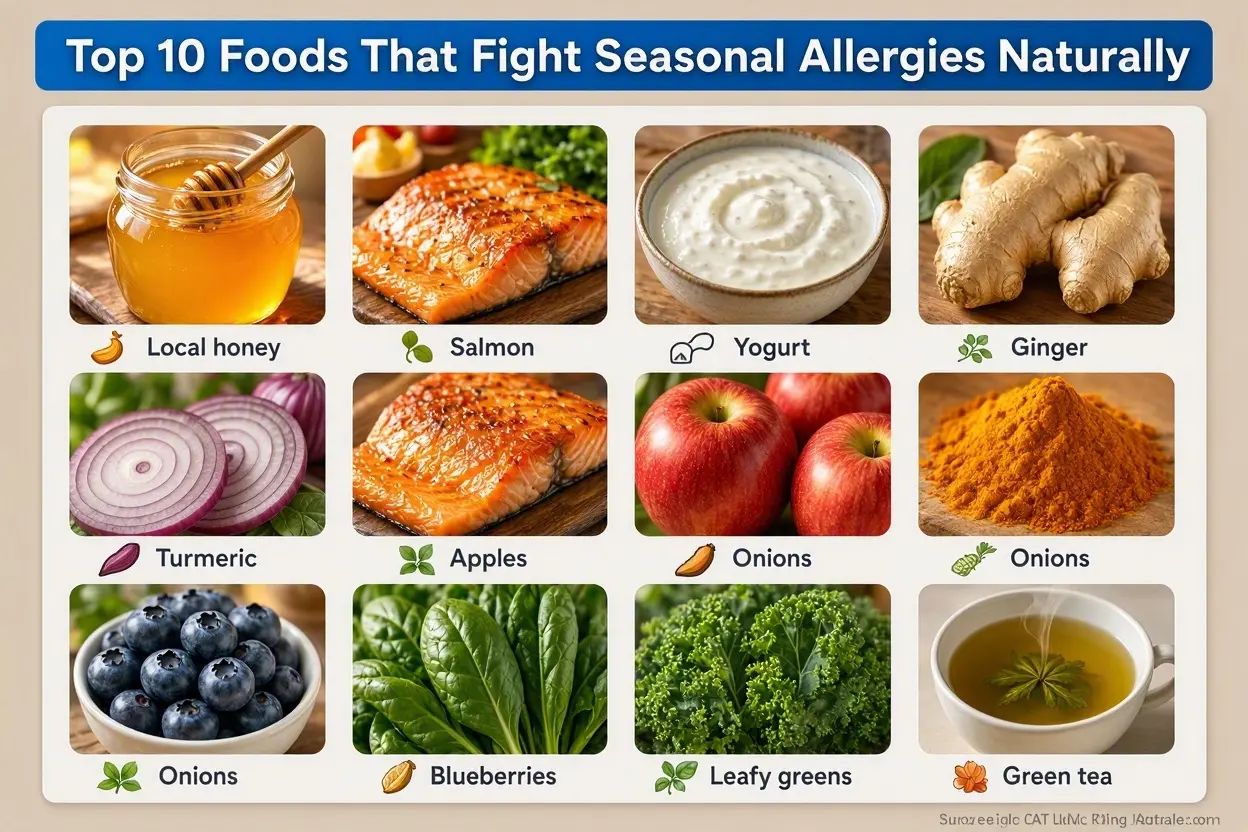
Does spring sunshine immediately make you think about sneezing, itchy eyes, and a box of tissues? If you have been searching for how to treat seasonal allergies or wondering about the Best Treatment for Seasonal Allergies, nutrition is one supportive area worth understanding. Certain foods provide antioxidants, omega-3 fatty acids, probiotics, vitamin C, quercetin, and other compounds that may help Fight Seasonal Allergies by supporting normal immune and inflammatory responses.
However, food should be viewed as part of a broader allergy-management strategy, not as a replacement for medical treatment.
That distinction matters more than ever in the United States. CDC data released in 2026 show that 25.2% of U.S. adults had a diagnosed seasonal allergy in 2024. Among children younger than 18, the rate was 20.6%.
At Mindliva, the best health and wellness magazine in the United States, practical nutrition is viewed as one part of an evidence-informed lifestyle. Here is what current research suggests about foods that may deserve a place on your plate during pollen season.
Why Seasonal Allergies Are Becoming a Bigger U.S. Health Issue
Seasonal allergic rhinitis, often called hay fever, occurs when the immune system reacts to airborne allergens such as tree pollen, grass pollen, or ragweed.
When an allergic person encounters one of these triggers, immunoglobulin E, or IgE, contributes to activation of immune cells including mast cells. Chemicals such as histamine are then released, producing familiar symptoms including sneezing, nasal itching, watery eyes, congestion, and a runny nose.
The 2026 Asthma and Allergy Foundation of America report shows how dramatically allergy conditions can vary by location. Boise, Idaho ranked as the most challenging U.S. metro for pollen allergies, followed by San Diego, California and Tulsa, Oklahoma. AAFA also pointed to unusual weather patterns, warming temperatures, drought, and intense rainfall as factors influencing pollen seasons.
A Current U.S. Allergy Snapshot
| U.S. Allergy Indicator | Latest Reported Figure |
| Adults with diagnosed seasonal allergies | 25.2% |
| Children with diagnosed seasonal allergies | 20.6% |
| Adults with any selected allergic condition | 31.7% |
| Children with any selected allergic condition | 29.5% |
| 2026 highest-ranked Allergy Capital | Boise, Idaho |
| Other top 2026 allergy metros | San Diego and Tulsa |
These numbers help explain why interest in anti-inflammatory diets and natural allergy support continues to grow across the country.
1. Apples: A Convenient Source of Quercetin
An apple will not work like an antihistamine medication, but apples contain quercetin, a plant flavonoid that has attracted attention in allergy research.
Laboratory and early clinical research suggests quercetin may influence mast-cell activity and inflammatory signaling. A 2025 scientific review examining dietary bioactive compounds reported promising findings for quercetin, although researchers emphasized that clinical evidence remains limited and additional standardized trials are necessary.
Apples are also affordable, portable, and widely available, making them an easy addition to breakfast or an afternoon snack.
There is one important exception. Some people with birch pollen allergy experience pollen-food allergy syndrome after eating raw apples. Symptoms can include an itchy mouth or scratchy throat because proteins in apples can cross-react with pollen allergens. Cooking the fruit may reduce this reaction for some individuals.
2. Onions: Another Quercetin-Rich Everyday Food
Apples are not the only dietary source of quercetin. Onions, particularly their outer layers, provide meaningful amounts of the same flavonoid.
Adding onions to salads, soups, omelets, roasted vegetables, or sandwiches can increase the diversity of plant compounds in your diet without requiring an expensive supplement.
Moreover, eating quercetin as part of a balanced diet provides other nutrients and phytochemicals at the same time.
The key is realistic expectations. Research involving concentrated quercetin formulations cannot automatically be translated into a claim that eating an onion will stop sneezing. Instead, onions should be considered one component of a nutrient-dense, anti-inflammatory eating pattern.
3. Oranges and Other Vitamin C-Rich Fruits
Oranges, grapefruit, strawberries, kiwi, and other vitamin C-rich fruits are frequently included in discussions about foods for allergy season.
Vitamin C acts as an antioxidant and contributes to normal immune function. Oxidative stress is also involved in inflammatory pathways, making antioxidant-rich foods valuable for general health.
However, vitamin C should not be marketed as a cure for allergic rhinitis. Evidence does not support replacing established allergy treatments with orange juice or vitamin C supplements.
A better approach is simple: use citrus and other fresh fruits to help build a nutrient-rich diet during periods when your immune system is being repeatedly exposed to environmental allergens.
People with grass pollen allergy should also know that oranges can occasionally participate in pollen-food cross-reactions. If raw fruit repeatedly causes mouth or throat itching, discuss the reaction with an allergist.
4. Berries: Small Fruits With Powerful Plant Compounds
Blueberries, strawberries, blackberries, and raspberries deliver vitamin C, anthocyanins, polyphenols, and fiber.
These compounds are widely studied for their antioxidant and anti-inflammatory properties. Although clinical evidence specifically linking a bowl of berries to reduced seasonal allergy symptoms is limited, berries fit comfortably into the kind of diet generally associated with cardiovascular, metabolic, and immune health.
Try adding berries to oatmeal, plain yogurt, smoothies, or salads rather than relying on heavily sweetened berry-flavored products.
For people trying to Fight Seasonal Allergies naturally, improving overall dietary quality is generally more sensible than searching for one miracle ingredient.
5. Ginger: One of the More Interesting Research Candidates
Ginger deserves special attention because it has actually been investigated in people with allergic rhinitis.
In a randomized, double-blind controlled study involving 80 patients, researchers compared 500 mg of ginger extract with 10 mg of loratadine. Both groups experienced improvements in nasal symptom scores and quality-of-life measures, with no significant difference between groups for several outcomes.
That result is interesting, but it should be interpreted carefully.
The study tested a standardized ginger extract, not ginger tea or a teaspoon of fresh ginger in dinner. Therefore, the clinical dose cannot simply be converted into an equivalent culinary recommendation.
Still, fresh ginger can be a flavorful part of an allergy-season diet. Add it to stir-fries, soups, smoothies, or unsweetened tea.
6. Turmeric: Curcumin Has Been Studied in Allergic Rhinitis
Turmeric contains curcumin, another plant compound being investigated for its anti-inflammatory and immunomodulatory properties.
One randomized, double-blind study included 241 people with allergic rhinitis. After two months, the curcumin group showed improvements in symptoms including sneezing, runny nose, congestion, and nasal airflow measurements compared with placebo. Researchers also observed changes in several inflammatory and immune markers.
A newer review published in 2025 also identified curcumin as one of several promising dietary bioactive compounds being studied in allergic disease, while emphasizing that research remains heterogeneous.
For everyday use, turmeric can be added to lentils, rice, roasted vegetables, soups, eggs, or curries.
7. Salmon and Other Omega-3-Rich Fish
Salmon, sardines, trout, and mackerel provide EPA and DHA omega-3 fatty acids, which participate in the body’s regulation of inflammation.
Omega-3 fatty acids are involved in the production of specialized pro-resolving mediators and may influence several immune pathways. Recent scientific reviews have explored their possible role in allergic disease, although benefits observed in human research remain modest and depend on the population being studied.
Even without making an allergy-treatment claim, fatty fish remains a nutritious addition to the typical American diet.
For many adults, replacing a highly processed meat-based meal with salmon and vegetables once or twice a week can improve the overall nutritional quality of the diet.
8. Yogurt and Kefir for Probiotic Support
The connection between the gut microbiome and immune system has made probiotics a major area of allergy research.
Yogurt and kefir containing live cultures are convenient dietary sources of probiotics. Research summarized by the National Center for Complementary and Integrative Health examined 23 studies involving 1,919 participants with allergic rhinitis. Some evidence suggested improvements in symptoms and quality of life.
However, different studies used different bacterial strains, doses, and treatment periods. As a result, experts currently cannot recommend one specific probiotic as a standard allergic-rhinitis treatment.
Choose plain or lower-sugar yogurt when possible, since excessive added sugar offers no advantage for allergy management.
9. Green Tea: A Source of EGCG
Green tea contains epigallocatechin gallate, or EGCG, a polyphenol studied for its antioxidant and immune-related properties.
Preclinical research suggests EGCG may influence mast-cell signaling and inflammatory activity. However, human evidence for treating seasonal allergic rhinitis remains limited, so green tea should be considered a healthy beverage rather than a proven allergy therapy.
Replacing heavily sweetened drinks with unsweetened green tea can also reduce added sugar intake.
For people sensitive to caffeine, decaffeinated green tea is another option, although polyphenol concentrations can vary between products.
10. Pineapple: Nutritious, Refreshing, but Not a Miracle Cure
Pineapple frequently appears on natural-allergy food lists because it contains bromelain, a group of protein-digesting enzymes that has been investigated for several inflammatory conditions.
The nutritional benefits of pineapple are straightforward. It provides vitamin C, manganese, water, carbohydrates, and plant compounds.
What should be avoided is the claim that eating pineapple will immediately clear nasal congestion. Evidence supporting bromelain for seasonal allergies is not strong enough to justify treating pineapple as a replacement for established therapies.
Enjoy it because it contributes to dietary variety and nutrient intake, not because it has been proven to cure pollen allergy.
Can Food Really Fight Seasonal Allergies?
Nutrition can support health, but allergic rhinitis is a genuine immune-mediated medical condition.
For persistent allergic rhinitis, professional guidelines continue to support established treatments. Intranasal corticosteroids are considered highly effective for nasal symptoms, while antihistamines, nasal antihistamines, saline treatments, trigger avoidance, and allergy immunotherapy may also be recommended depending on the patient.
Therefore, the smartest strategy is usually layered:
Reduce pollen exposure, follow appropriate medical treatment, sleep well, stay hydrated, and build a nutrient-dense diet rich in fruits, vegetables, fish, whole foods, and fermented foods when tolerated.
This approach is more credible than expecting a single food or supplement to switch off an allergic immune response.
A Special Warning About Pollen-Food Allergy Syndrome
One surprising issue deserves attention before dramatically increasing certain fruits and vegetables during allergy season.
People with pollen allergies can sometimes react to proteins in raw foods that resemble proteins in pollen. This is called pollen-food allergy syndrome, also known as oral allergy syndrome.
For example, birch pollen can cross-react with raw apple, pear, cherry, carrot, kiwi, and several other foods. Ragweed may cross-react with foods such as banana, cucumber, zucchini, and melon.
Typical symptoms include mouth itching, tingling, or throat irritation.
Although reactions are commonly mild and localized, more serious reactions can occur. Anyone experiencing significant throat swelling, difficulty breathing, widespread hives, dizziness, or other systemic symptoms should seek appropriate medical care.
Conclusion: Build an Allergy-Smart Plate, Not a Miracle-Food List
Seasonal allergies are increasingly difficult to ignore in the United States. With roughly one in four American adults reporting a diagnosed seasonal allergy, simple strategies that complement evidence-based care deserve attention.
Foods such as apples, onions, berries, ginger, turmeric, salmon, yogurt, citrus fruits, green tea, and pineapple contribute valuable nutrients and bioactive compounds. Some, particularly ginger, curcumin, probiotics, quercetin, and omega-3 fatty acids, are also being investigated scientifically for their potential roles in allergic and inflammatory responses.
However, the goal should not be to replace antihistamines, nasal medications, allergen avoidance, or immunotherapy with groceries.
Instead, use food as part of a broader wellness strategy. A colorful, minimally processed diet may help support the body while proven allergy treatments address the condition itself.
That balanced approach provides a much smarter way to Fight Seasonal Allergies throughout America’s increasingly unpredictable pollen seasons.
FAQs About Foods and Seasonal Allergies
1. What foods are best for seasonal allergies?
Foods rich in quercetin, vitamin C, omega-3 fatty acids, probiotics, and polyphenols may support general immune and inflammatory health. Examples include apples, berries, salmon, yogurt, onions, ginger, and turmeric.
2. Can changing my diet stop pollen allergies?
Diet alone generally cannot eliminate pollen allergy because the condition involves an immune response to environmental allergens. Nutrition is better used alongside pollen avoidance and evidence-based allergy treatment.
3. Does local honey help seasonal allergies?
The evidence remains inconsistent. NCCIH notes that only a limited number of studies have evaluated honey for seasonal allergy relief, and existing results do not establish it as a reliable treatment.
4. Can probiotics reduce allergy symptoms?
Possibly, but the research is mixed. Reviews suggest certain probiotics may improve allergic-rhinitis symptoms or quality of life, yet differences between probiotic strains and studies prevent a universal recommendation.
5. When should I see an allergist for seasonal allergies?
Consider professional evaluation when symptoms are persistent, interfere with sleep or daily activities, trigger asthma symptoms, or are not controlled with routine measures. An allergist can identify triggers and discuss medications or immunotherapy.





Be First to Comment