
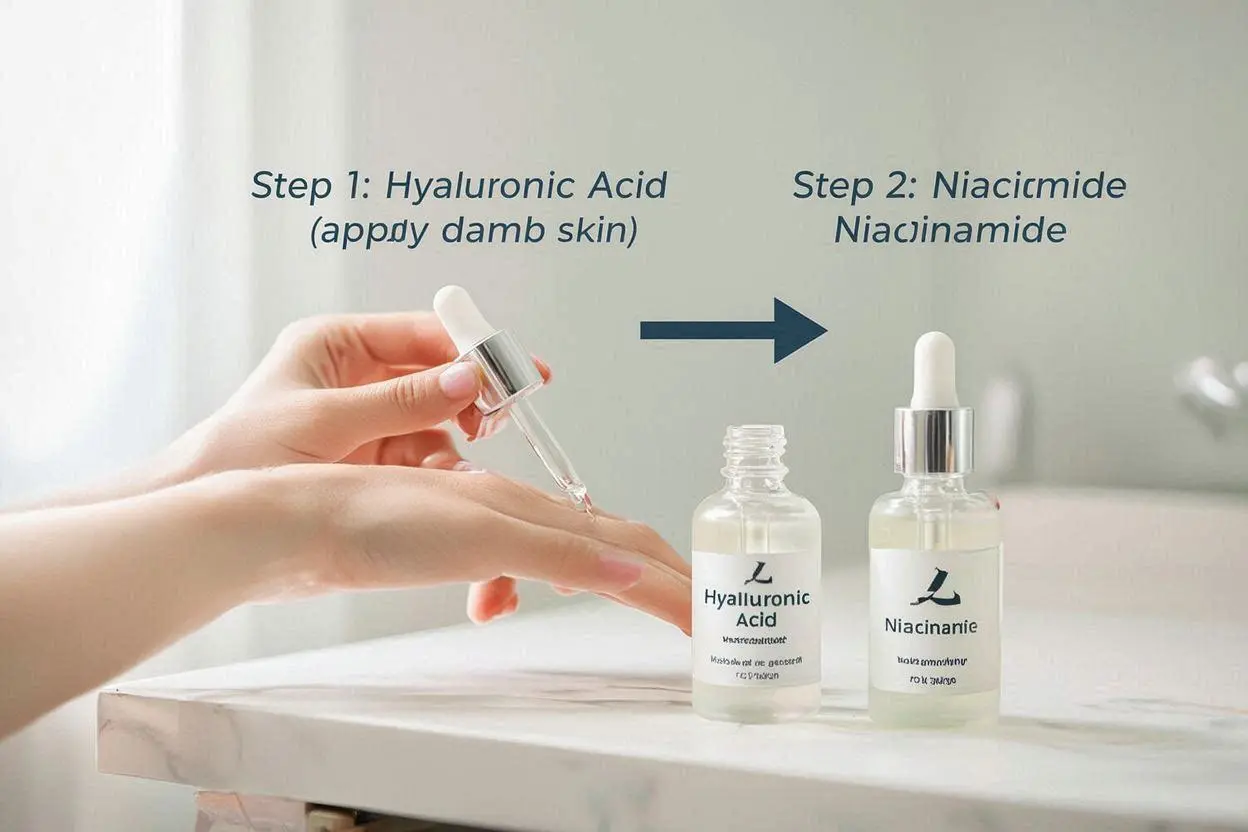
Skincare can feel confusing, especially when you have multiple serums in your hands. You might wonder what to use first and how to layer everything properly. One of the most common questions people ask is: should I apply niacinamide first or hyaluronic acid?
The good news is that both ingredients are very gentle and work well together. You don’t need a complicated routine to see results. When used in the right order, they can help your skin look smoother, more hydrated, and more balanced.
In this guide, you’ll learn everything in very simple words — what these ingredients do, the correct order, how to use them for your skin type, and tips most people don’t talk about.
Understanding Niacinamide and Hyaluronic Acid
Before talking about the order, it’s important to understand what each ingredient actually does.
What is Hyaluronic Acid?
Hyaluronic acid is a powerful ingredient that helps your skin hold water. Think of it like a sponge that pulls moisture into your skin.
What it does:
- Keeps your skin hydrated
- Makes skin feel soft and smooth
- Reduces dryness and rough patches
- Gives a plump, fresh look
It works best when your skin is slightly damp because it grabs water and locks it in.
What is Niacinamide?
Niacinamide is a form of vitamin B3. It is known for improving overall skin health.
What it does:
- Strengthens your skin barrier
- Reduces redness and irritation
- Controls oil (sebum)
- Helps shrink the look of pores
- Improves uneven skin tone
It is suitable for almost all skin types, even sensitive skin.
Niacinamide vs Hyaluronic Acid: Key Differences
Both ingredients are helpful, but they do different jobs.
Hyaluronic Acid:
- Focus: Hydration
- Works instantly
- Makes skin soft and plump
- Best for dry or dehydrated skin
Niacinamide:
- Focus: Repair and balance
- Works over time
- Improves skin tone and texture
- Best for oily, acne-prone, and sensitive skin
Simple way to understand:
- Hyaluronic acid = adds moisture
- Niacinamide = keeps skin strong and balanced
Together, they make your skin healthy and smooth.
Which Goes First: Niacinamide or Hyaluronic Acid?
The correct order is:
Hyaluronic acid first → Niacinamide second
Why this order works
There is a simple rule in skincare:
Apply products from thin to thick
- Hyaluronic acid is very light and watery
- Niacinamide is slightly thicker
Step-by-step logic:
- Hyaluronic acid goes first
- It absorbs quickly
- Pulls moisture into your skin
- Works best on damp skin
- Niacinamide goes after
- Seals in that moisture
- Strengthens your skin barrier
- Helps keep hydration locked inside
If you reverse the order, the results may not be as effective.
Complete Skincare Routine (Correct Order)
Morning Routine (With Vitamin C)
This routine protects your skin during the day.
Steps:
- Cleanser
Wash your face to remove oil and dirt. - Toner (optional)
Helps prepare your skin. - Vitamin C serum
Brightens skin and protects from pollution. - Hyaluronic acid
Apply on slightly damp skin. - Niacinamide
Helps balance oil and strengthen skin. - Moisturizer
Locks everything in. - Sunscreen (SPF)
Very important to protect your skin.
Night Routine (Without Vitamin C)
Nighttime is for repair and recovery.
Steps:
- Cleanser
Remove dirt, oil, and makeup. - Toner (optional)
You can also use gentle exfoliation here. - Hyaluronic acid
Rehydrate your skin. - Niacinamide
Repair and strengthen overnight. - Moisturizer
Lock in hydration.
Why Proper Layering Matters
Applying products in the right order helps:
- Better absorption
- Faster results
- Less irritation
- More hydration
If you apply products randomly, they may not work properly.
Can You Use Niacinamide and Hyaluronic Acid Together?
Yes, absolutely.
They are one of the best skincare combinations.
What happens when you use both:
- Hyaluronic acid hydrates your skin deeply
- Niacinamide keeps that moisture locked in
- Your skin looks smoother and healthier
They are safe to use every day, even twice a day.
Common Mistakes People Make
Many people don’t get results because of small mistakes.
Mistake 1: Applying hyaluronic acid on dry skin
- It works better on damp skin
- Always apply after washing your face
Mistake 2: Using too much product
- A few drops are enough
- More product does not mean better results
Mistake 3: Not waiting between layers
- Give each serum 30–60 seconds to absorb
Mistake 4: Skipping moisturizer
- Serums alone are not enough
- Always seal with moisturizer
Myths vs Facts
Myth: Niacinamide and Vitamin C cannot be used together
Fact: Modern formulas are safe to use together.
Myth: Hyaluronic acid exfoliates skin
Fact: It only hydrates, it does not remove dead skin.
Myth: Order does not matter
Fact: Correct order helps products work better.
Myth: These ingredients are harsh
Fact: Both are gentle and safe for daily use.
How to Use for Different Skin Types
Dry Skin
- Use hyaluronic acid on damp skin
- Follow with niacinamide
- Use a thick moisturizer
This helps deeply hydrate and repair dry skin.
Oily Skin
- Niacinamide helps control oil
- Hyaluronic acid gives light hydration
This combination prevents greasy skin.
Combination Skin
- Apply hyaluronic acid to dry areas
- Use niacinamide on whole face
This balances both oily and dry areas.
Sensitive Skin
- Start slowly (every other day)
- Do a patch test first
- Use gentle formulas
Both ingredients are safe but always introduce slowly.
Extra Tips Most People Miss
These small tips can make a big difference.
Use damp skin for hyaluronic acid
This improves hydration results.
Store vitamin C properly
Keep it in a cool, dark place.
Be consistent
Results take time. Use daily for best results.
Don’t mix too many actives
Keep your routine simple to avoid irritation.
Use sunscreen daily
Without SPF, your skin can get damaged easily.
Can You Mix Both in One Step?
Yes, you can.
If both are water-based, you can:
- Mix a few drops in your palm
- Apply together
But layering separately gives better results.
Using with Other Ingredients
With Retinol
- Apply retinol first
- Wait a few minutes
- Apply niacinamide after
Niacinamide helps reduce irritation from retinol.
With Vitamin C
- Use vitamin C in the morning
- Apply before both serums
This helps protect and brighten your skin.
Recommended Routine for Beginners
If you are just starting, keep it simple:
Morning:
- Cleanser
- Hyaluronic acid
- Niacinamide
- Moisturizer
- Sunscreen
Night:
- Cleanser
- Hyaluronic acid
- Niacinamide
- Moisturizer
Simple routines often work best.
The Bottom Line
Skincare does not have to be complicated.
When using niacinamide and hyaluronic acid, remember this:
- Hyaluronic acid goes first
- Niacinamide goes second
- Use vitamin C before both in the morning
This simple routine helps your skin stay:
- Hydrated
- Smooth
- Balanced
- Healthy
The most important thing is consistency. Stick to your routine, and over time you will see clear, glowing skin.
Frequently Asked Questions
Can I use niacinamide and hyaluronic acid every day?
Yes, both are gentle and safe for daily use, even twice a day.
Should I apply hyaluronic acid on wet or dry skin?
Always apply it on slightly damp skin for better hydration.
Can I skip moisturizer if I use these serums?
No, moisturizer is important to lock in hydration.
How long should I wait between layers?
Wait about 30–60 seconds for each product to absorb.
Can I use niacinamide with retinol?
Yes, apply retinol first, then niacinamide to reduce irritation.
Can I mix both serums together?
Yes, but layering them separately gives better results.
Which is better for acne: niacinamide or hyaluronic acid?
Niacinamide is better for acne because it controls oil and reduces inflammation.
Can beginners use both ingredients?
Yes, they are perfect for beginners because they are gentle and effective.
How long does it take to see results?
You may see hydration instantly, but full results usually take 2–4 weeks.






Be First to Comment