
You look in the mirror and see small dots on your nose or forehead. They look dark, and you may think they are blackheads. You might even feel like squeezing them or buying strong acne products.
But wait. Not all dark dots are blackheads.
Some of them are called sebaceous filaments. These are completely normal and are part of your skin. If you treat them like acne, you can damage your skin instead of helping it.
Many people keep trying to remove these dots again and again without success. That’s because they are not treating the real problem.
In this guide, you will learn in very simple words:
- What sebaceous filaments are
- What blackheads are
- How they look different
- Why it matters
- The right way to treat each one
What Are Sebaceous Filaments?
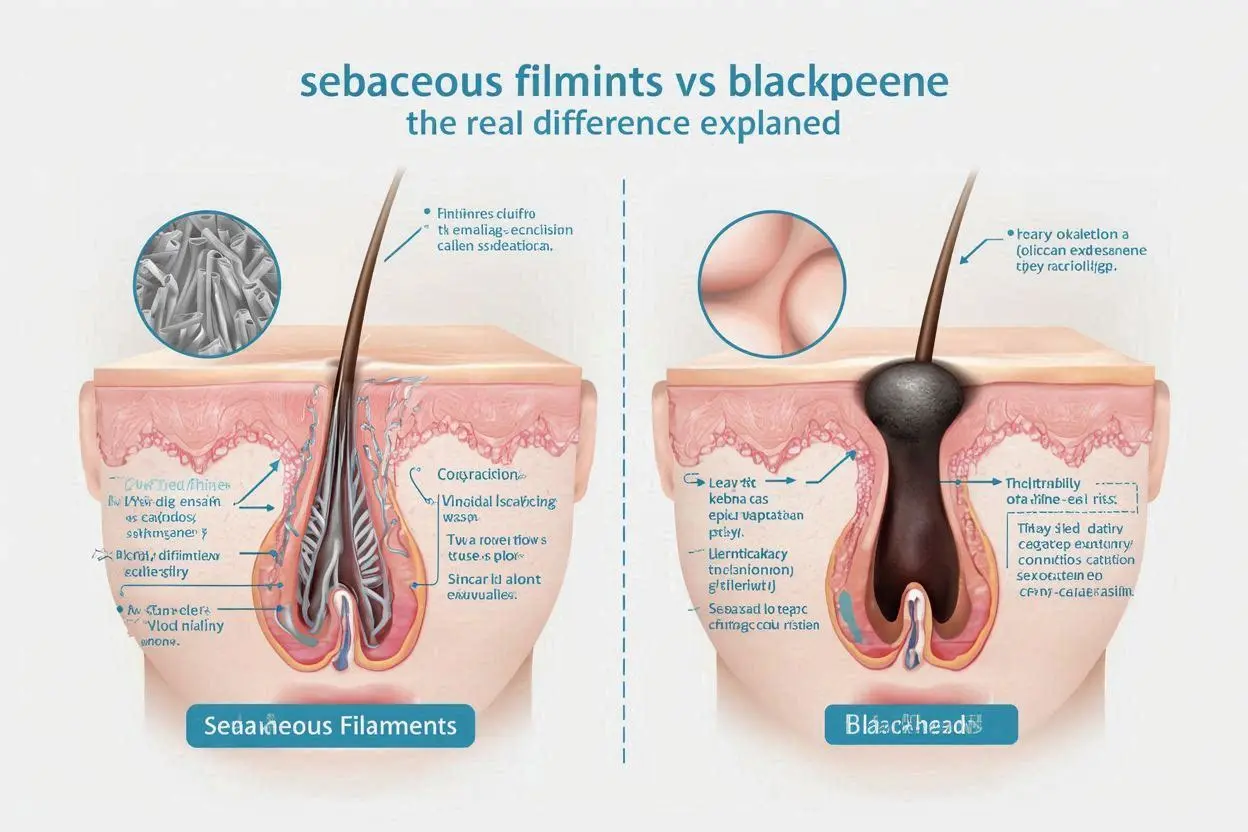
Sebaceous filaments are natural parts of your skin.
They are tiny structures inside your pores that help oil (called sebum) move from inside your skin to the surface. This oil keeps your skin soft and protected.
Where Do They Appear?
You will mostly see sebaceous filaments in oily areas like:
- Nose
- Forehead
- Chin
These areas have more oil glands, so filaments are more visible.
How Do They Look?
Sebaceous filaments usually:
- Look light grey, yellow, or slightly tan
- Stay flat on the skin (not raised)
- Appear in a regular, even pattern
- Cover a large area like the whole forehead or nose
Important Point
Sebaceous filaments:
- Are normal
- Are not acne
- Cannot be removed permanently
- Refill again after cleaning
Everyone has them. They are more visible if:
- You have oily skin
- Your pores are larger
What Are Blackheads?
Blackheads are a type of acne.
They happen when a pore gets blocked with:
- Oil
- Dead skin cells
- Dirt or bacteria
When this blocked material reaches the surface and touches air, it turns dark. This process is called oxidation.
Where Do They Appear?
Blackheads appear in areas like:
- Nose
- Forehead
- Chin
- Back
How Do They Look?
Blackheads usually:
- Look black or dark brown
- May be slightly raised
- Look like a plug stuck inside a pore
- Appear randomly, not in a pattern
Important Point
Blackheads:
- Are acne
- Need treatment
- Can get worse if ignored
- May turn into pimples
Sebaceous Filaments vs Blackheads: Easy Comparison
Here is a simple way to understand the difference:
Nature
- Sebaceous filaments: Natural and normal
- Blackheads: Acne problem
Color
- Filaments: Light grey or yellow
- Blackheads: Dark black or brown
Shape
- Filaments: Flat and smooth
- Blackheads: Raised or clogged
Pattern
- Filaments: Even pattern across skin
- Blackheads: Random spots
After Removing
- Filaments: Come back quickly
- Blackheads: Can clear with treatment
How to Tell the Difference on Your Forehead
Many people get confused, especially with forehead dots.
Here are simple ways to check:
Color Check
- Light color → Sebaceous filaments
- Dark black → Blackheads
Pattern Check
- Even, spread-out dots → Filaments
- Random spots → Blackheads
Touch Check
- Flat → Filaments
- Slightly raised → Blackheads
Pressure Test (Be Gentle)
- Filaments: Oil comes out and refills quickly
- Blackheads: A dark plug comes out
Causes of Sebaceous Filaments
Sebaceous filaments are caused by normal oil production.
Your skin naturally produces oil to stay healthy.
Why They Look More Visible
They become more visible when:
- You have oily skin
- Your pores are large
- Your skin produces more oil
- Your genetics (family traits)
Symptoms
- Small light dots
- No pain
- No redness
- No swelling
They are only a cosmetic concern, not a health problem.
Causes of Blackheads
Blackheads form when pores get blocked.
Common Causes
- Too much oil production
- Dead skin buildup
- Hormonal changes
- Heavy skincare or makeup
- Not cleaning skin properly
Symptoms
- Dark spots
- Slight bumps
- Clogged pores
- Can turn into pimples
Why You Should Not Remove Sebaceous Filaments Aggressively
This is very important.
Trying to remove sebaceous filaments like blackheads can harm your skin.
Risks of Wrong Treatment
- Skin irritation
- Redness
- Enlarged pores
- More oil production
- Skin damage
- Scarring
When you remove too much oil:
- Your skin produces even more oil
- Filaments become more visible
So instead of helping, you make things worse.
Best Prevention Tips
Good daily habits can help keep both under control.
For Sebaceous Filaments
- Wash your face gently every day
- Use chemical exfoliation 2–3 times a week
- Use light, non-comedogenic moisturizer
- Avoid picking your skin
For Blackheads
- Clean your face daily, especially at night
- Avoid heavy oily products
- Keep hair products away from face
- Start early treatment when you see clogged pores
How to Manage Sebaceous Filaments
You cannot remove them completely, but you can make them less visible.
1. Gentle Exfoliation
Use products with salicylic acid (BHA):
- Helps clean oil inside pores
- Makes filaments less noticeable
Use 2–3 times per week.
2. Use Retinoids
Retinoids help:
- Improve skin texture
- Control oil
- Reduce pore appearance
Start slowly to avoid irritation.
3. Moisturize Properly
Even oily skin needs moisture.
Choose:
- Light moisturizers
- Non-comedogenic products
What to Avoid
- Do not squeeze regularly
- Avoid pore strips often
- Avoid harsh scrubs
How to Treat Blackheads Properly
Blackheads need active treatment.
1. Acne Treatments
Use:
- Salicylic acid
- Retinoids
- Benzoyl peroxide
These help:
- Clear clogged pores
- Stop new blackheads
2. Professional Help
If blackheads don’t go away:
- Visit a dermatologist
- Try chemical peels
- Get safe extractions
3. Simple Skincare Routine
Follow 3 steps:
Cleanse
Remove oil and dirt
Treat
Use acne products
Protect
Use sunscreen daily
Common Mistakes People Make
Many people damage their skin by doing the wrong things.
Avoid These Mistakes
- Treating filaments like acne
- Over-washing face
- Using too many harsh products
- Squeezing skin daily
- Ignoring moisturizer
- Expecting instant results
Extra Tips Most People Don’t Know
These are often missed but very helpful:
Diet and Lifestyle
- Drink enough water
- Eat balanced food
- Reduce oily and sugary food
- Sleep well
Pillow and Hygiene
- Change pillow covers regularly
- Clean makeup brushes
- Avoid touching your face often
Sun Protection
Sun damage can:
- Make pores look bigger
- Darken blackheads
Always use sunscreen.
Bottom Line
If you see small, light-colored dots in an even pattern, they are most likely sebaceous filaments. They are normal and do not need aggressive treatment.
If you see dark, raised plugs, those are blackheads and need proper acne care.
Understanding the difference helps you:
- Save money
- Avoid skin damage
- Choose the right treatment
Work with your skin, not against it.
FAQs
1. Are sebaceous filaments bad for skin?
No. They are completely normal and help your skin stay healthy.
2. Can sebaceous filaments turn into blackheads?
Sometimes, if pores get clogged, they can turn into blackheads.
3. Should I squeeze sebaceous filaments?
No. Squeezing can damage your skin and make pores bigger.
4. Why do sebaceous filaments come back?
Because they are part of your natural skin process and keep refilling.
5. How often should I exfoliate?
2–3 times per week is enough. Do not overdo it.
6. Can blackheads go away on their own?
Sometimes, but most need proper treatment to clear fully.
7. Are pore strips good?
Use them rarely. Overuse can damage skin and enlarge pores.
8. Which ingredient is best for blackheads?
Salicylic acid is one of the best ingredients for treating blackheads.
9. Do oily people have more sebaceous filaments?
Yes. Oily skin makes them more visible.
10. Can I permanently remove sebaceous filaments?
No. You can only reduce their appearance, not remove them forever.




Be First to Comment