
Hiking should feel enjoyable, not uncomfortable. But many beginners make simple mistakes like wearing jeans, cotton shirts, or the wrong shoes. This can turn a beautiful hike into a tiring and painful experience.
Imagine this: your clothes are wet from sweat or rain, your shirt sticks to your skin, and your feet hurt with every step. At the same time, other hikers look relaxed and confident. The reason is simple. They understand what to wear hiking and how to layer clothes properly.
Hiking clothes are not just about style. They do three very important jobs:
- Keep your body comfortable in changing weather
- Protect you from sun, wind, rain, and cold
- Move easily with your body on rough terrain
If you choose the right hiking outfit, you will enjoy the journey and feel fresh even after hours on the trail.
What to Wear Hiking (Complete Beginner-Friendly Guide)
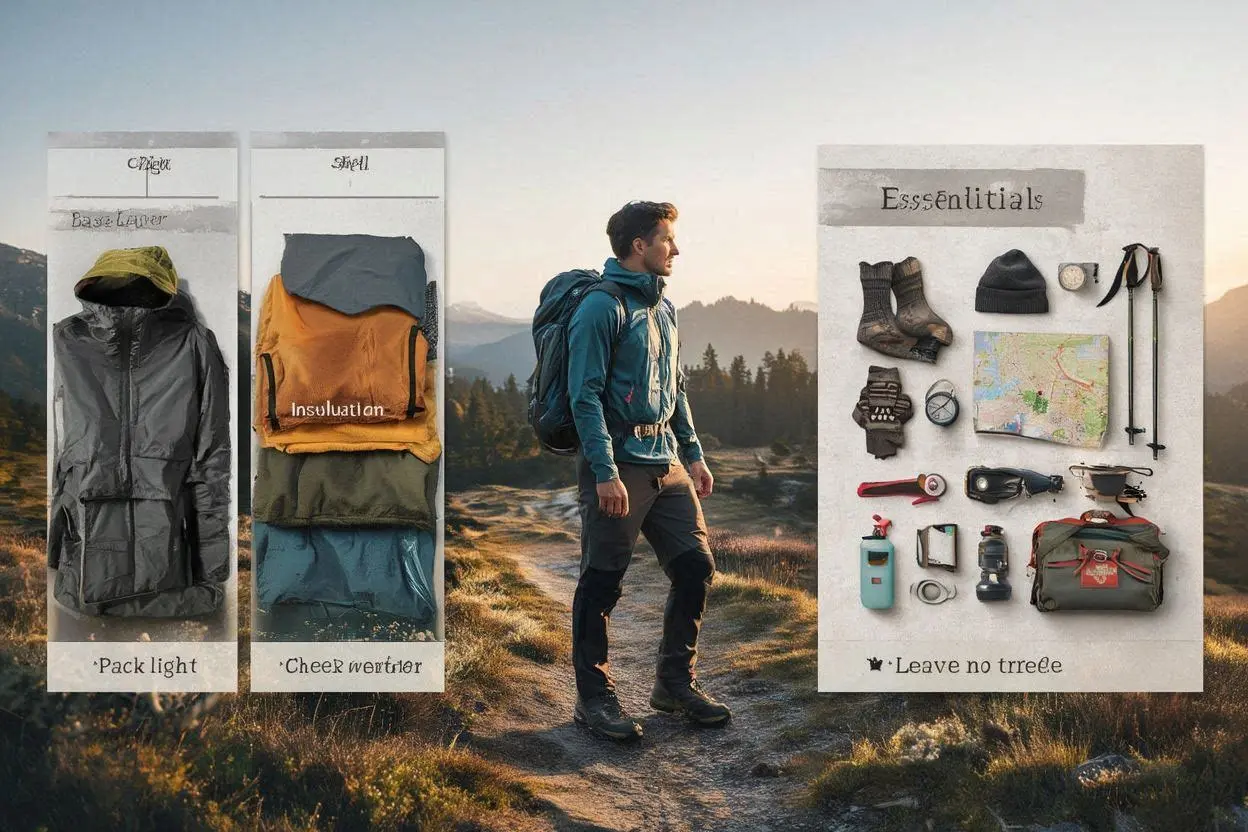
When planning your hiking outfit, think of it as a layering system. Each layer has a specific purpose and works together to control your body temperature.
Base Layer (Sweat-Wicking Clothing)
The base layer is the first layer that touches your skin. Its job is to pull sweat away from your body so you stay dry.
- Best materials: polyester and merino wool
- Keeps you dry and prevents chills
- Ideal for hot and cold weather
Mid Layer (Warmth Layer)
The mid layer helps trap body heat and keep you warm.
- Fleece jackets and sweaters work best
- Grid fleece allows better airflow
- Great for cool weather and rest breaks
Outer Layer (Protection Layer)
This layer protects you from rain and wind.
- Rain jackets for wet weather
- Windbreakers for light protection
- Look for breathable and lightweight designs
Insulated Layer (Extra Warmth)
This layer is useful in cold weather.
- Down jackets for dry cold
- Synthetic jackets for wet conditions
- Best for early mornings or high altitudes
Bottom Wear (Hiking Pants or Leggings)
Your bottoms should be flexible and quick-drying.
- Stretchable hiking pants
- Lightweight leggings
- Nylon fabric for durability
Socks (Prevent Blisters)
Socks are very important for comfort.
- Choose merino wool or synthetic socks
- Avoid cotton socks
- Helps prevent blisters and foot pain
Footwear (Hiking Shoes vs Boots)
Shoes can make or break your hike.
- Hiking shoes: lightweight and breathable
- Hiking boots: better support and protection
- Choose based on trail difficulty
Read: 27 Soccer Mom Outfit Ideas for Busy Days
What NOT to Wear Hiking (Common Mistakes)
Avoid these common mistakes to stay comfortable:
Cotton Clothes
- Absorb sweat and stay wet
- Make you feel cold
Denim or Jeans
- Heavy and stiff
- Not suitable for movement
Fashion Sneakers
- Poor grip on trails
- Unsafe for hiking
Open-Toe Shoes
- No protection from rocks
- Risk of injury
Loose Accessories
- Can get caught in branches
- Keep things simple
Smart Hiking Outfit Strategy (Easy Tips)
Follow these simple strategies:
Start Slightly Cool
Do not overdress. Your body will warm up as you walk.
Adjust Layers Often
- Remove layers before sweating
- Add layers when resting
Test Your Gear
Wear shoes at home before hiking.
Choose Neutral Colors
- Black, grey, olive, navy
- Add one bright color for style
Must-Have Hiking Gear List (Beginner Essentials)
Clothing Essentials
- Sweat-wicking shirt
- Mid-layer fleece
- Insulated jacket
- Hiking pants or leggings
- Wool socks
Accessories
- Hat
- Sunglasses
- Gloves (cold weather)
Gear
- Backpack (15–28L)
- Water bottle
- Snacks
- First aid kit
Optional Gear
- Trekking poles
- Rain cover
- Extra socks
Cute and Practical Hiking Outfit Ideas
You can stay stylish while hiking.
Neutral Outdoor Look
- Beige sun hoodie
- Olive pants
- Black windbreaker
All-Black Sporty Style
- Black leggings
- Moisture-wicking t-shirt
- Light jacket
Summer Desert Style
- Light shirt
- Breathable shorts
- Sunglasses
What to Wear Hiking in Different Weather
Warm Weather Hiking Outfit
- Lightweight shirt
- Shorts or airy pants
- Sun hat
Spring and Fall Hiking Outfit
- Long-sleeve shirt
- Fleece jacket
- Rain jacket
Cold Weather Hiking Outfit
- Thermal base layer
- Insulated jacket
- Gloves and beanie
Dressing for Specific Trail Conditions
Hot and Humid Conditions
- Light clothing
- Ventilated pants
- Anti-chafing products
Cold and Wet Conditions
- Waterproof jacket
- Synthetic insulation
- Waterproof boots
Windy Areas
- Windbreaker
- Head covering
High Sun Exposure
- UPF clothing
- Sunscreen
- Wide hat
Bug-Heavy Areas
- Long sleeves
- Insect repellent
Understanding Best Fabrics for Hiking Clothes
Merino Wool
- Warm and odor-resistant
- Best for base layers
Polyester
- Quick drying
- Good for hot weather
Nylon
- Strong and durable
- Used in pants
Fleece
- Lightweight warmth
- Good mid-layer
Waterproof Fabrics
- Protect from rain
- Used in jackets
Complete Hiking Outfit Checklist
Before your hike, make sure you have:
- Base layer
- Mid layer
- Outer layer
- Hiking pants
- Proper shoes
- Wool socks
- Hat and sunglasses
- Backpack with water
- First aid kit
Final Thoughts
You do not need expensive gear to start hiking. Focus on comfort, safety, and simple clothing choices. As you gain experience, you can upgrade your gear.
The most important thing is to enjoy your hike and feel comfortable on the trail.
FAQs
What is the best outfit for hiking beginners?
A simple outfit with a moisture-wicking shirt, hiking pants, and proper shoes works best.
Can I wear cotton while hiking?
No, cotton holds sweat and makes you uncomfortable.
Are leggings good for hiking?
Yes, if they are stretchable and moisture-wicking.
What shoes should I wear?
Hiking shoes for easy trails and boots for rough terrain.
How many layers do I need?
Usually three: base, mid, and outer layer.
What should I pack for a day hike?
Water, snacks, a backpack, and basic safety items.
Is expensive hiking gear necessary?
No, you can start with affordable options.
How do I prevent blisters?
Wear good socks, proper shoes, and keep your feet dry.


Be First to Comment