
Everyone knows they should test their smoke alarms regularly, but very few people enjoy doing it. Standing on a chair while a piercing siren screams a few inches from your ears is enough to put anyone off for another year. With babies sleeping, pets that panic, and neighbours close by, it is easy to understand why tests get skipped.
With a First Alert smart smoke alarm, you do not have to choose between safety and your hearing. These alarms offer quieter ways to check the sensor, the battery, and the app connection, using test mode, the app itself, and special test spray used correctly. This guide explains which tests are silent, which ones still make a short sound, and how to do a full check without setting off the full siren.
Quick Answer
Use the test or silence feature in the First Alert app or the Onelink app for your model to run a quiet check of the connection and electronics without the full alarm. For a real sensor test, use approved aerosol test spray in a very short burst from the distance stated on the can, which triggers a brief alert rather than a long event. Never block the sensor or remove the alarm to avoid testing it, because only a proper test proves it will work in a fire.
What a Test Actually Needs to Check
A good test checks three separate things, and it helps to keep them apart in your mind. First, the electronics and battery. Second, the smoke sensor itself, which needs to prove it can detect particles in the air. Third, if your alarm is smart, the Wi-Fi and app link, so you will get a warning on your phone when you are away from home.
Pressing a button alone does not prove all three. On many alarms, the test button checks the electronics and the horn, but it does not put real smoke-like particles through the sensing chamber. That is why manufacturers also recommend an occasional sensor test with approved test spray. The smart approach is to use quiet app checks often, a short button test when you can tolerate the sound, and a proper spray test from time to time for full confidence.
Check your exact model in First Alert’s official support pages, because button behaviour, app names, and test instructions vary between standard First Alert alarms and the Onelink smart range.
Method 1: Run a Quiet Test From the App
For smart models connected to the First Alert or Onelink app, this is the quietest everyday check.
- Open the app and select the alarm you want to test.
- Confirm the alarm shows as online, with a good battery level and a recent check-in time.
- Look for a Test, Device Health, or History option in the device settings.
- Run the available test and watch for a success message in the app.
- Check the event history to confirm the test was recorded with the correct date and time.
An app test confirms your phone can reach the alarm and the alarm can report back. It cannot prove the smoke chamber is clean and sensitive, so treat it as one part of your routine, not the whole routine.
Method 2: Use the Test Button Without a Long Siren
The physical test button is the test most people fear, because on many models it sounds the horn. The trick is to understand what your model does. Some alarms give a short beep sequence when you press and release quickly, while holding the button longer starts a full loud test. Others sound the full horn for as long as the test runs.
To make a button test as gentle as possible:
- Warn everyone in the house, move pets to another room, and close doors to soften the sound.
- Pick a daytime hour when neighbours are least likely to be disturbed.
- Use ear protection or simple earplugs for the person pressing the button, especially if the alarm is on a low ceiling.
- Stand safely on a solid step stool, never on a chair with wheels or a bed.
- Press the button once, exactly as the manual describes, and step down as soon as the beep sequence confirms the horn works.
- If your model supports app silencing, keep the phone ready to silence the alert as soon as the test sound has been confirmed.
Never cover the alarm with tape, a shower cap, or a sock to muffle a test. Coverings can leave residue, block the sensor afterwards if you forget to remove them, and teach a bad habit that could one day leave the alarm disabled during a real fire.
Method 3: Test the Sensor With Test Spray, the Right Way
Approved smoke alarm test spray is made to trigger the sensor without a real fire, and when used correctly it produces a short alert rather than a long emergency event. It is available as an aerosol made specifically for detector testing. Never use cigarette smoke, incense held close, steam, or a lighter, which can damage or contaminate the sensor.
- Buy spray that states it is for smoke alarm or detector testing, and read the distance and burst length on the can.
- Open a window nearby for ventilation and warn the household that a short alarm may sound.
- Hold the can at the stated distance from the alarm, usually around one to two feet, not pressed against it.
- Spray one very short burst toward the sensor vents, then stop and wait.
- The alarm should respond within a short time. As soon as it sounds, silence it from the app or the silence button.
- Leave the room ventilated until the app shows the alarm is clear and back to normal.
Using too much spray is a common error. A long spray can coat the chamber and cause repeated false alarms. Short bursts are safer. If the alarm does not respond to a correct spray test, clean it gently as the manual allows and test once more. A sensor that still does not respond needs replacing.
For homes comparing models with better app testing features, see our guide to the best smart smoke and CO detectors for what to look for.
A Quiet Testing Routine That Actually Works
The best routine is one you will really follow all year. Build it around quiet checks, with a full test only now and then.
- Monthly: Run the app health check, confirm online status and battery, and glance at the alarm for dust or a flashing fault light.
- Every three to six months: Do a short button test at a sensible daytime hour with ear protection ready.
- Once or twice a year: Do a proper sensor test with approved spray, using one short burst.
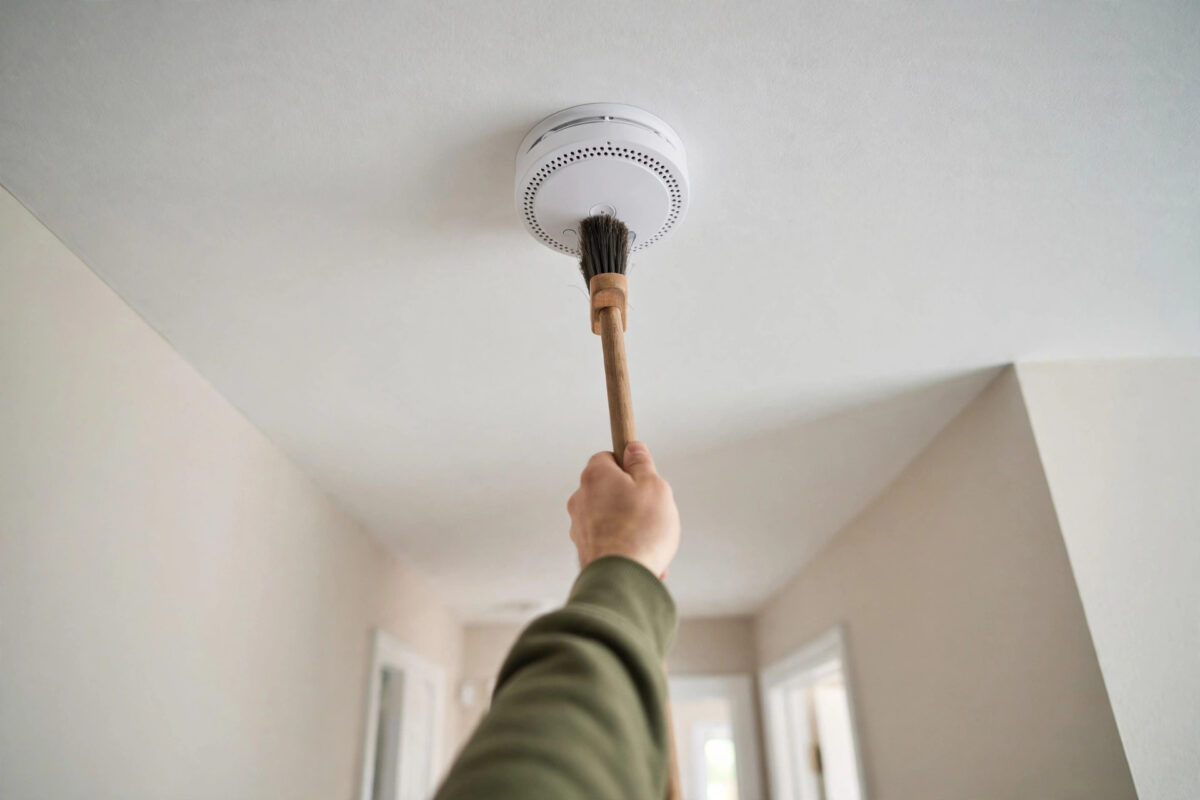
- After any real event or renovation: Clean the alarm gently with a soft brush or vacuum attachment as the manual allows, then repeat the app and button checks, because dust from building work can affect sensors.
Mistakes to Avoid
- Skipping tests because of the noise: Use quiet app checks monthly instead of doing nothing. Some checking is always better than none, as long as a full sensor test still happens during the year.
- Using real smoke or a flame: Lighters, matches, and burning paper can melt, stain, or contaminate the sensor and are a fire risk in themselves. Use only approved test spray.
- Spraying too much, too close: A long, close spray coats the chamber and causes hours of false alarms. Short bursts at the stated distance are enough.
- Covering the alarm to muffle it: Tape and covers get forgotten. An alarm left covered cannot protect you.
- Testing on an unsafe chair: Falls during alarm tests are a real injury risk. Use a proper step stool on a flat floor.
- Removing batteries to stop a test sound: If you take batteries out, you may forget to replace them. Use the silence feature instead, every time.
Conclusion
You can keep a First Alert smart smoke alarm properly tested without suffering through a long, full-volume siren every month. Use the app for quiet health and connection checks, use the button test briefly and safely when you need to hear the horn, and use approved test spray in a single short burst once or twice a year to prove the sensor really detects smoke. Know your silence method before you start, test every alarm in the home, and record the dates. That routine gives you real protection and a much calmer house.
Frequently Asked Questions
Does pressing the test button prove the smoke sensor works?
Not completely. On many models the button checks the electronics, battery, and horn, but does not pass particles through the sensing chamber. That is why an occasional test with approved detector spray is recommended as well as regular button and app checks.
Can I test the alarm while my baby is sleeping?
Do the quiet app health check at any time, because it makes no sound in the room on most smart models. Save button and spray tests for when the baby is awake or out of the house, since both can produce at least a short alarm sound.
What spray is safe for testing a smoke alarm?
Only aerosol products made and labelled specifically for smoke detector testing. Follow the distance and burst instructions on the can exactly. Never use hairspray, air freshener, steam, cigarette smoke, or a flame, as these can damage the sensor.
How long will the alarm sound during a spray test?
With one short burst it should sound briefly, then clear once you silence it and ventilate the room. If it sounds for a very long time or keeps re-triggering, you may have used too much spray. Ventilate well and allow time for the chamber to clear.
What should I do if my alarm fails a test?
Check the battery and expiry date first, clean the outside vents gently as the manual allows, and test again once. Alarms have a limited life, often around ten years. A sensor that still fails, or an alarm past its expiry date, must be replaced, not repaired.
Leave a Reply