
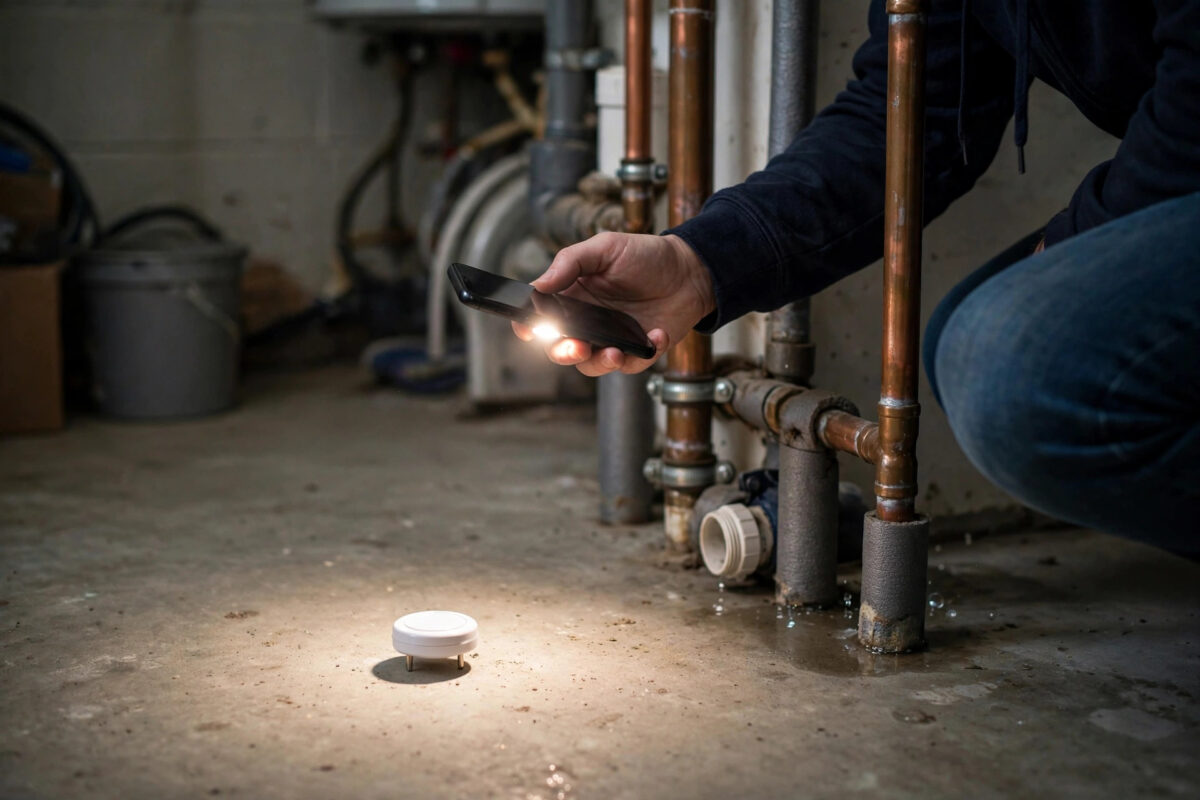
Few alerts make your heart sink faster than a leak warning on your phone. You rush home, check under sinks and behind the washing machine, and find everything completely dry. Then it happens again the next night. And again. After the third false alarm, most people start ignoring the alerts, which is dangerous, because one day the leak might be real.
The good news is that a Moen Flo device or a small spot water sensor that triggers with no leak present almost always has a simple, explainable cause. It might be a drop of condensation, a sensor sitting in the wrong place, a change in water pressure, or a dirty contact. This guide helps you track down the real trigger, fix it properly, and trust your alerts again.
Quick Answer
Dry the sensor and the area completely, check for condensation on cold pipes, and move spot sensors slightly away from pipe joints and appliances that sweat or vibrate. For a Moen Flo shutoff valve, run a health test, check for tiny pressure drops caused by toilets or irrigation, and update the app settings. If alerts continue with a fully dry, clean sensor, test the sensor with a damp finger to confirm it works, then contact support about a faulty unit.
How Moen Flo and Spot Sensors Detect Problems
It helps to know what you own, because the two types of device warn you in different ways. A Moen Flo Smart Water Shutoff is fitted on your main water line. It watches flow, pressure, and temperature all day and night. If it sees water running when it should not be, or a pressure drop that suggests a leak somewhere in the pipes, it sends an alert and can close the valve.
A spot sensor, such as a Moen Flo Leak Detector or another small puck sensor, works in a simpler way. It sits on the floor or under an appliance. When water touches the metal contacts on its base, or on a probe cable attached to it, it sends an alert. It does not need much water. A few drops, or even a thin film of damp, can be enough.
Step 1: Rule Out a Real, Hidden Leak First
Never assume the first alert is false. Some leaks are slow, hidden, and easy to miss, and they can do a lot of damage before you see a puddle.
- Turn off every tap and appliance that uses water.
- Check your water meter. If it is still moving slowly, water is going somewhere.
- Feel along pipe joints, toilet bases, and under sinks with a dry tissue. Tissue shows damp better than your fingers.
- Check water heater relief valves, toilet fill valves, and fridge water lines, which often leak quietly.
- Run the health test or leak test in the Moen app and read the result carefully.
Step 2: Fix Spot Sensor False Triggers
If the pipes are dry and the alert came from a spot sensor, work through these common causes in order. Start with the sensor itself.
Condensation on Cold Pipes
This is the number one cause. Cold water pipes sweat in warm, humid rooms, especially in summer and in basements and utility rooms. Drops form on the pipe, run down, and land exactly where you placed the sensor to catch leaks. The sensor cannot tell condensation from a burst pipe.
Fix it by insulating cold pipes with foam pipe insulation, moving the sensor a few inches away from directly under a joint, and improving ventilation in the room. A small drip tray under the sensor area can also help you see whether water is really falling there.
Placement on Damp or Conductive Surfaces
A sensor placed on bare concrete in a basement can pick up ground moisture. A sensor on a metal surface, or with its contacts touching a damp mat or cleaning cloth fibres, can also trigger. Place the sensor on a clean, dry, flat surface, use the wall mount or probe cable if your model has one, and keep the contacts off direct contact with concrete if the floor is often damp.
Dirt, Dust, and Cleaning Products
Wipe the contacts with a dry cloth. Dust mixed with a little humidity can create a path that the sensor reads as water. Residue from floor cleaning products can do the same. After cleaning a floor with a wet mop, lift the sensor, dry the spot fully, and put it back only when the floor is completely dry.
Moen’s official customer support pages include placement guides for leak detectors that show the best positions under sinks, behind toilets, and near water heaters.
Step 3: Fix Moen Flo Shutoff False Alerts
If your main Flo shutoff is alerting at night or while you are away, the cause is usually a normal water use pattern that the device has not learned yet, or a small pressure change.
- Open the app and review the alert details. Note the time, the type of alert, and how much water it says was used.
- Check what runs at that time. Irrigation systems, water softeners that recharge at night, ice makers, and humidifiers all use water on a timer.
- Teach the system. When an alert is caused by a known, safe use, mark it in the app as normal activity if that option is shown, so the device learns your home pattern.
- Check toilet cisterns. A toilet that refills briefly every hour creates exactly the pattern that looks like a small hidden leak.
- Look at pressure. Very high household pressure and sudden pressure spikes when valves close can confuse readings. If your home has a pressure regulator, check its setting, or ask a plumber to test it.
- Update the firmware and the app, then restart the device as directed in the app.
Choosing the right mix of a shutoff valve and spot sensors matters too. See our guide to the best water leak detectors for how the two types work together in a full home setup.
Step 4: Test the Sensor Properly After Fixing
Once you have dried, cleaned, and moved the sensor, test it so you know it still protects you.
- Place the dry sensor in its new position and wait an hour to confirm no new alert arrives.
- Touch the contacts with a slightly damp finger or a drop of water on a tissue. The alert should arrive within seconds.
- Dry the contacts fully and confirm the alert clears in the app.
- Check the battery level. A weak battery can cause strange behaviour and missed or repeated alerts on some models.
- Note the date and the fix you made, so if the alert returns you can see whether the pattern matches.
If a sensor triggers again within minutes on a surface you are certain is bone dry, with clean contacts and a good battery, the sensor itself may be faulty. Swap it with another sensor in a different room. If the problem moves with the sensor, the unit is the issue. If the problem stays in the room, the room has a moisture source you still need to find.
Mistakes to Avoid
- Turning alerts off: Silencing notifications stops the annoyance but removes your protection. Fix the cause instead, and keep alerts on for real leaks.
- Placing sensors directly under pipe joints: That is the exact spot where condensation drips fall. Move a few inches to the side where a real leak puddle would still reach.
- Ignoring night-time pressure alerts: Repeated small alerts at the same time each night usually point to a toilet, softener, or irrigation pattern that needs attention.
- Using a sensor with flat batteries: Low power can cause unreliable readings. Replace batteries as soon as the app warns you.
- Testing with a cup of water: Flooding the sensor to test it can damage flooring and the device. A damp finger gives the same result safely.
- Assuming one fix fits all: A spot sensor problem is about surface moisture, while a shutoff alert is about flow and pressure. Treat them differently.
Conclusion
A water alert with no leak is frustrating, but it is rarely random. For spot sensors, think condensation, placement, and dirty contacts. For a Moen Flo shutoff, think hidden toilet leaks, timed appliances, and pressure patterns the device is still learning. Work through the checks in order, test the sensor with a damp touch after each fix, and keep a short note of times and causes. Within a few days, false alerts should stop, and when a real alert does come, you will be able to act fast and trust it completely.
Frequently Asked Questions
Can condensation really set off a water sensor?
Yes, very easily. A few drops from a cold pipe are real water on the contacts, so the sensor is working correctly. Pipe insulation, better ventilation, and moving the sensor slightly away from the drip point usually solve it for good.
Why does my Moen Flo alert mostly at night?
At night your home is quiet, so the device can detect very small flows more clearly. Toilets refilling, water softeners recharging, and irrigation timers also run at night, which creates patterns that look like leaks until the system learns them.
Should I lower the sensitivity to stop false alerts?
Only if the app offers a supported sensitivity or alert setting for your model, and only by a small amount. Lowering protection too far means a real slow leak could be missed. Fixing placement and causes is always better than reducing sensitivity.
How do I know if the sensor itself is faulty?
Dry it fully, put it on a dry table away from pipes, and leave it for several hours. If it alerts on a dry table with clean contacts and fresh batteries, swap its position with another sensor. If the false alerts follow the device, it is likely faulty.
When should I call a plumber instead of fixing it myself?
Call a plumber if your meter moves with everything turned off, if you see damp walls or floors, if pressure is very high, or if alerts continue after you have checked toilets and appliances. A hidden pipe leak needs professional tools to locate safely.

Leave a Reply