
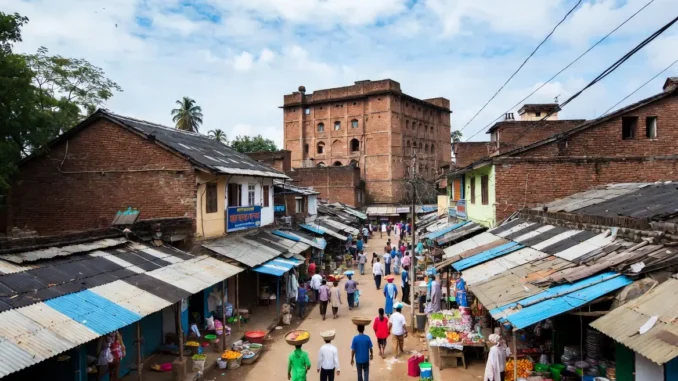
Shahzadpur, a vibrant upazila in Sirajganj District, Rajshahi Division, Bangladesh, stands as a testament to the country’s rich historical tapestry and dynamic present. Often spelled as Shahjadpur in local contexts, Shahzadpur derives its name from “Shahzad,” meaning prince in Persian, reflecting its origins tied to a legendary Sufi prince. With a population exceeding 600,000 and spanning over 324 square kilometers, Shahzadpur blends ancient traditions with modern aspirations, making it a fascinating subject for travelers, historians, and economists alike.
Why is Shahzadpur important? This sub-district is not just a geographical entity; it’s a hub of cultural significance, known for its association with Nobel laureate Rabindranath Tagore, thriving handloom industry, and agricultural prowess. In an era where rural Bangladesh is evolving rapidly, Shahzadpur exemplifies resilience, offering insights into sustainable development, tourism potential, and community-driven growth. Whether you’re a beginner curious about Bangladeshi history or an advanced researcher delving into socio-economic patterns, this article provides a deep dive into Shahzadpur’s multifaceted world.
From its Sufi roots to its role in the national economy, Shahzadpur encapsulates the essence of Bangladesh’s rural heartland. Let’s explore its history, geography, economy, and more, complete with statistics, examples, tips, and actionable insights to engage and inform.
History of Shahzadpur: From Sufi Legends to Modern Independence
Shahzadpur’s history is a captivating narrative of spirituality, conquests, and socio-political transformations. Understanding this timeline helps appreciate how the area evolved from a remote settlement to a bustling upazila.
Origins and Sufi Influence
The story of Shahzadpur begins around 1250 AD when Makhdum Shah Daulah, a Yemenite Sufi prince, arrived with his followers to spread Islam. Accompanied by his sister, three nephews, and twelve disciples, he faced opposition from the local Hindu ruler, Raja Vikrama Keshari. A fierce conflict ensued, resulting in the prince’s martyrdom along with many of his companions. Touched by remorse, the raja honored them with proper burials, naming the area Shahzadpur – “city of the prince.”
This event marks Shahzadpur as a spiritual center. The mazar (mausoleum) of Makhdum Shah Daulah remains a pilgrimage site, attracting devotees annually. For beginners, think of it as similar to how Sufi shrines like Ajmer Sharif in India draw crowds – a blend of faith and folklore. Advanced readers might note the cultural syncretism, where Hindu and Islamic elements merged, fostering tolerance in the region.
Mughal Era and Zamindari Rule
By the Mughal period, Shahzadpur was part of the Yusufshahi pargana, named after Shah Yusuf. It fell under the zamindari of Raja Ray, a Baro-Bhuiyan leader who initially rebelled against Mughal jagirdar Tuqmaq Khan but later allied with them. Raja Ray’s son, Raghu Ray, converted to Islam and served the empire faithfully.
A notable event was Subahdar Islam Khan I celebrating Eid al-Fitr in Shahzadpur, highlighting its strategic importance. Examples include the remnants of Mughal forts, though many have faded. Pros of this era: Cultural exchange boosted arts and architecture. Cons: Frequent conflicts disrupted local life, leading to economic instability.
British Colonial Period and Peasant Uprisings
Under British rule, Shahzadpur saw the establishment of a thana (police station) in 1845 and a munsif court. The area was embroiled in the Pabna Peasant Uprisings (1873–1876), where farmers protested exploitative zamindari systems.
Statistics from the era show literacy rates hovering around 24.8% in 1991, a legacy of colonial neglect. Tip: For history buffs, visit the Shahzadpur Dargah Mosque to see colonial influences in architecture. Actionable insight: Researchers can use British census data for comparative studies on rural unrest.
You also read: Achieving a Healthy Life WellHealthOrganic
Modern History and Upazila Formation
Post-independence, Shahzadpur was upgraded to an upazila in 1983 under President Hussain Muhammad Ershad’s decentralization efforts. Today, it plays a role in Bangladesh’s democratic landscape, with MPs like Merina Jahan representing Sirajganj-6.
Geography and Climate of Shahzadpur: A Riverine Paradise
Shahzadpur lies at 24°10.2′N 89°35.3′E, covering 324.15 km² in Sirajganj District. Bordered by rivers like the Jamuna, it features fertile alluvial soil ideal for agriculture.
The climate is tropical monsoon, with heavy rainfall (average 1,800 mm annually) from June to October, hot summers (up to 35°C), and mild winters (10-20°C). Landscapes include lush paddy fields and riverbanks, perfect for eco-tourism.
Pros: Fertile land supports diverse crops. Cons: Flooding risks, as seen in annual inundations affecting 20-30% of the area. Tip: Visit during winter for comfortable exploration. Actionable insight: Farmers can adopt flood-resistant rice varieties like BRRI dhan52 for better yields.
Demography and Culture: A Diverse Community in Shahzadpur
As per the 2022 census, Shahzadpur has 601,633 residents across 147,529 households, with a density of 1,856 per km². The sex ratio is nearly balanced (100.21 males per 100 females), and literacy stands at 65.30% – a significant jump from 38.38% in 2011.
Religiously, 96.85% are Muslim, 3.14% Hindu. Culture revolves around festivals like Eid, Puja, and Urs at mazars. Examples: Rabindranath Tagore’s poetry recitals during cultural events.
Pros: High community cohesion. Cons: Urban migration (17.64% urban) strains rural resources. Tip: Engage in local Baul music sessions for cultural immersion.
Economy and Industries: The Backbone of Shahzadpur
Shahzadpur’s economy is agrarian and artisanal, contributing to Bangladesh’s GDP through agriculture (main income source) and handloom.
Agriculture in Shahzadpur
Agriculture employs over 50% of the workforce, with rice, jute, wheat, and sugarcane as key crops. Shahzadpur is a “milk pocket” area, producing 500,000 liters of milk daily. Buffalo farming is prominent, with net income from fattening one buffalo at BDT 26,713 half-yearly.
Statistics: 30,000 dairy farmers, with companies like BRAC and PRAN collecting 350,000 liters daily. Pros: High employment. Cons: Flat milk prices (Tk43-50/liter) amid rising costs. Tip: Diversify into organic farming for premium markets.
Handloom and Textile Industry
Shahzadpur hosts a major fabric market, attracting traders from India for sarees and cloths. Handloom weaving, the second-largest rural employer after agriculture, produces jamdani sarees, bedcovers, and more.
Examples: Markets in Nagardala village, with exports rising since 1972. Pros: Cross-border trade boosts income. Cons: COVID-19 reduced operations to 60-70% capacity. Actionable insight: Weavers can use e-commerce platforms like Daraz for wider reach.
Other Sectors
Small industries include food processing and fisheries. Unemployment is low, but challenges like high feed costs (88% of farmers cite this) persist.
Administration and Governance in Shahzadpur
Shahzadpur Upazila, formed in 1982, includes 13 union parishads and Shahzadpur Municipality. Led by Chairman Azad Rahman, it focuses on infrastructure and services.
Pros: Decentralized governance improves efficiency. Cons: Bureaucratic delays. Tip: Use the citizen charter for quick service access.
Education in Shahzadpur: Building the Future
Literacy has risen to 65.30%, with institutions like Rabindra University (established 2016) leading the way. Key colleges: Shahjadpur Government College. Schools number over 50, including NGO-run ones.
Examples: Shahjadpur Ibrahim Pilot Girls’ High School. Pros: Affordable education. Cons: Rural-urban disparity. Actionable insight: Parents can leverage government scholarships for higher studies.
Attractions and Tourism in Shahzadpur: Must-Visit Sites
Shahzadpur’s tourism potential is untapped, focusing on heritage and nature.
Rabindra Kachari Bari
Tagore’s revenue office, where he composed poetry, is a literary landmark. Tip: Visit in May for Tagore festivals.
Makhdum Shah Daulah Mazar
A spiritual hub with annual Urs celebrations.
Other Sites
Shahzadpur Dargah Mosque, river cruises. Pros: Low-cost travel. Cons: Limited infrastructure. Actionable insight: Promote eco-tours for sustainable income.
Notable People from Shahzadpur: Icons and Influencers
From Sufi saint Makhdum Shah Daulah to politicians like Merina Jahan and actors like Uzzal, Shahzadpur has produced trailblazers.
Also read: Winter Solstice Great Conjunction: A Rare Celestial Spectacle
Conclusion: Why Shahzadpur Matters Today
Shahzadpur embodies Bangladesh’s blend of tradition and progress, from its historical depths to economic vitality. As literacy rises and tourism grows, it invites exploration and investment. Consider visiting or supporting local handlooms – your action could preserve this heritage.
For related topics, link to articles on “Rabindranath Tagore in Bangladesh,” “Handloom Industry in Bangladesh,” or “Sirajganj District Guide.”
FAQ: Common Questions About Shahzadpur
- What is Shahzadpur known for? Shahzadpur is renowned for its Sufi history, Rabindranath Tagore connections, handloom textiles, and dairy production.
- How large is Shahzadpur’s population? As of 2022, it has 601,633 residents.
- What are the main economic activities in Shahzadpur? Agriculture, dairy farming, and handloom weaving dominate.
- Is Shahzadpur safe for tourists? Yes, it’s generally safe, but follow local advisories during monsoons.
- How can I reach Shahzadpur? By bus from Dhaka (4-5 hours) or train to Sirajganj, then local transport.
- What educational institutions are in Shahzadpur? Rabindra University and several government colleges stand out.

Leave a Reply