
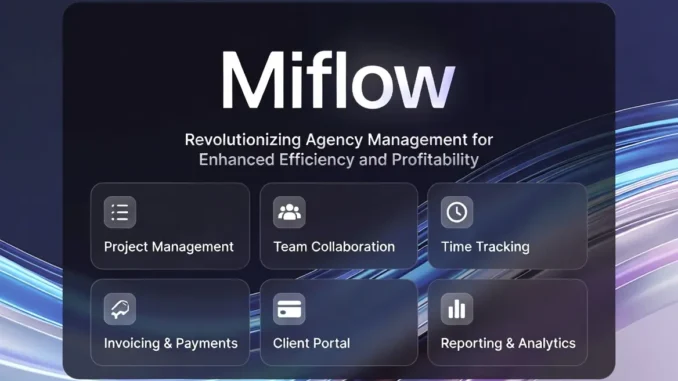
In today’s fast-paced digital landscape, agencies—whether marketing, creative, advertising, or consulting—face immense pressure to deliver high-quality work on time and within budget. Yet, many struggle with fragmented processes, unclear profitability tracking, and inefficient workflows that lead to burnout, missed deadlines, and shrinking margins. Enter Miflow, a powerful project management software designed specifically for agencies to transform chaos into clarity.
Miflow, often stylized as miflow®, is an ERP (Enterprise Resource Planning) solution tailored for agency environments. It turns abstract services into traceable, defined products, centralizes data for real-time insights, and empowers teams to monitor profitability, budgets, and progress seamlessly. Launched in 2022 by Raul Mendoza, a former creative director frustrated with existing tools, Miflow addresses core pain points like over-budget projects and stagnant team growth.
Why is Miflow important? Statistics paint a stark picture: According to a 2025 Project Management Institute (PMI) survey, 97% of agencies faced at least one major campaign challenge in the past year, including going over budget (55%) and overdue deadlines (54%). Moreover, only 2.5% of companies successfully complete all their projects, with an average of 11.4% of invested resources wasted due to poor management. Miflow steps in as a holistic tool to mitigate these issues, boosting efficiency, profitability, and overall agency health.
This comprehensive guide dives deep into Miflow, exploring its features, benefits, implementation tips, and more. Whether you’re a beginner agency owner dipping your toes into project management software or an advanced user seeking optimization, you’ll find actionable insights here. Let’s explore how Miflow can elevate your agency operations.
Understanding Miflow: The Fundamentals
At its core, Miflow is more than just project tracking software—it’s a comprehensive platform that integrates task management, time tracking, budgeting, invoicing, and accounting. Built for agencies, it recognizes the unique challenges of creative and service-based work, where projects often involve fluid scopes, diverse teams, and client-driven changes.
Miflow’s primary goal is to provide real-time visibility into project health. By centralizing data from budgets, expenses, billable hours, and invoices, it offers a “real-time photo” of your agency’s operations. This isn’t just about monitoring; it’s about empowering decision-making to protect margins and foster growth.
For beginners, think of Miflow as your agency’s command center. It replaces scattered spreadsheets, emails, and disparate tools with a unified dashboard. Advanced users appreciate its ERP-like capabilities, allowing for scalable customization as agencies grow from small teams to enterprise levels.
Key LSI terms like “agency workflow automation,” “real-time profitability tracking,” and “project budgeting software” encapsulate Miflow’s essence. Founded amid the post-pandemic shift to remote work, it draws from real-world experiences, such as Mendoza’s time in marketing where profitability tracking was a constant hurdle.
Key Features of Miflow
Miflow packs a robust set of features tailored to agency needs. Here’s a breakdown:
Project Tracking and Task Management
Miflow excels in turning services into traceable products. Users can define projects as structured entities with milestones, tasks, and subtasks. Dashboards provide live updates on progress, helping teams avoid bottlenecks.
For example, a marketing agency handling a client’s social media campaign can break it down into content creation, approval, scheduling, and analytics phases. Miflow’s task management includes custom templates for recurring projects, reducing setup time by up to 50%.
Statistics show that poor project management leads to 65% project failure rates. Miflow counters this with features like dependency mapping and automated notifications, ensuring nothing slips through the cracks.
Budgeting and Financial Tools
Accurate budgeting is a top challenge, with 42% of professional services leaders citing resource planning issues. Miflow’s budgeting module allows users to set direct and indirect costs, track expenses in real-time, and forecast margins.
Users can input hourly rates, fixed fees, or hybrid models, with the system alerting when projects approach budget limits. Integration with accounting tools ensures seamless data flow, minimizing errors.
Time Tracking and Resource Allocation
Tracking billable time is a sore spot for nearly half of agencies. Miflow’s time tracking is intuitive, with timers, manual entries, and mobile apps for deskless workers.
Resource allocation features visualize team workloads, preventing overload. For instance, if a designer is booked 120% on multiple projects, Miflow suggests reassignments to maintain balance.
Invoicing and Accounting Integration
Miflow streamlines invoicing by generating bills based on tracked hours and expenses. It supports custom approvals and links to business tools for automated payments.
This feature is crucial for profitability, as fragmented data is a top agency challenge. By centralizing everything, agencies can spot unprofitable clients early.
Additional Tools: Workflow Automation and Analytics
Miflow includes workflow automation engines for custom processes, live tracker boards for visual oversight, and document management. Analytics provide insights into team performance, project ROI, and overall agency health.
Also read: Trendzguruji.me Awareness: Empowering Digital Citizens for a Safer Online World
Benefits of Using Miflow for Your Agency
Adopting Miflow yields tangible benefits. First, it enhances profitability by providing real-time margin tracking—essential when 40% of PS leaders struggle with this. Agencies report improved budget accuracy and reduced waste.
Efficiency gains come from streamlined workflows, reducing administrative time. A creative agency might cut project setup from hours to minutes using templates.
For team morale, Miflow reduces chaos, as noted in Mendoza’s story. Clear visibility fosters accountability without micromanagement.
Scalability is another perk; as agencies grow, Miflow adapts, supporting more users and complex projects. Beginners benefit from its user-friendly interface, while advanced users leverage deep integrations.
Overall, Miflow aligns with the 90% of creatives who believe great campaigns require great project management.
How Miflow Works: A Step-by-Step Guide
Getting started with Miflow is straightforward:
- Sign Up and Setup: Create an account on miflow.io. Import existing data from tools like spreadsheets or other PM software.
- Define Services as Products: Use templates to turn offerings (e.g., SEO audits) into traceable entities with predefined tasks and budgets.
- Project Creation: Input client details, set timelines, assign teams, and allocate resources.
- Tracking and Monitoring: Teams log time, update tasks, and track expenses via dashboards.
- Analysis and Invoicing: Review real-time reports, adjust as needed, and generate invoices.
- Optimization: Use analytics to refine processes for future projects.
This cycle ensures continuous improvement, addressing challenges like scope creep and fragmented data.
Pros and Cons of Miflow
Pros
- Tailored for agencies, unlike generic tools.
- Real-time profitability insights prevent financial surprises.
- User-friendly with strong automation.
- Positive user feedback on Product Hunt, with comments praising its utility for tracking.
Cons
- As a newer tool (launched 2022), it may lack some advanced integrations compared to veterans like Asana.
- Pricing might be higher for small startups (details vary; contact for quotes).
- Learning curve for non-tech-savvy users, though tutorials help.
Real-World Examples and Case Studies
Consider a mid-sized marketing agency struggling with over-budget campaigns. After implementing Miflow, they centralized data, spotting a client whose projects consistently eroded margins. By renegotiating terms, they boosted profitability by 25%.
Another example: A freelance-turned-agency owner, like Mendoza, used Miflow to scale from solo to team operations, tracking billables accurately and avoiding growth stagnation.
While specific case studies are emerging, Product Hunt testimonials highlight its game-changing potential for efficiency.
Tips for Implementing Miflow in Your Agency
- Start Small: Pilot with one project to familiarize the team.
- Train Thoroughly: Use Miflow’s resources for onboarding.
- Integrate Gradually: Link with existing tools like QuickBooks for accounting.
- Monitor Metrics: Track KPIs like project completion rates pre- and post-implementation.
- Gather Feedback: Regularly solicit team input to optimize usage.
For advanced users, customize workflows to match agency-specific needs, such as creative review cycles.
Comparing Miflow with Other Project Management Tools
Miflow stands out against competitors like Teamwork, Asana, or Monday.com by focusing on agency profitability. While Asana excels in task management, it lacks Miflow’s financial depth. Teamwork offers similar features but isn’t as agency-centric.
Alternatives include Adobe Workfront for creatives or Smartsheet for spreadsheets lovers. However, Miflow’s ERP approach gives it an edge in holistic management.
The Future of Agency Management with Miflow
As agencies navigate AI integration and remote work, Miflow is poised to evolve. Potential updates could include AI-driven predictions for budgets or deeper analytics.
With project management software market valued at $8.82 billion in 2024, tools like Miflow will drive innovation, helping agencies overcome challenges like standardization (44% struggle).
Conclusion: Embrace Miflow for Agency Success
Miflow is a transformative tool that centralizes operations, boosts profitability, and streamlines workflows for agencies. From real-time tracking to accurate budgeting, it addresses key challenges backed by alarming statistics on project failures and waste.
If you’re ready to elevate your agency, sign up for Miflow today. Reflect on your current processes—could they use a real-time overhaul? Implementing Miflow could be the step toward sustainable growth and happier teams.
For related topics, consider internal links to articles on “Agency Workflow Optimization,” “Profitability Tracking Best Practices,” or “Top Project Management Tools for Creatives.”
FAQ: Common Questions About Miflow
What is Miflow and who is it for?
Miflow is project management software designed for agencies to track projects, budgets, and profitability in real-time. It’s ideal for marketing, creative, and consulting firms of all sizes.
How does Miflow improve agency profitability?
By centralizing data on expenses, hours, and invoices, Miflow provides insights to protect margins and identify unprofitable projects early.
Is Miflow easy to use for beginners?
Yes, its intuitive interface and templates make it accessible, though training is recommended for full utilization.
What integrations does Miflow support?
Miflow links with accounting tools, time trackers, and business apps for seamless data flow.
How much does Miflow cost?
Pricing is customized; contact Miflow for quotes based on team size and needs. It often includes tiered plans starting from basic to enterprise.
Can Miflow handle remote or deskless teams?
Absolutely, with mobile apps and live trackers, it’s suitable for distributed workforces.

Leave a Reply