
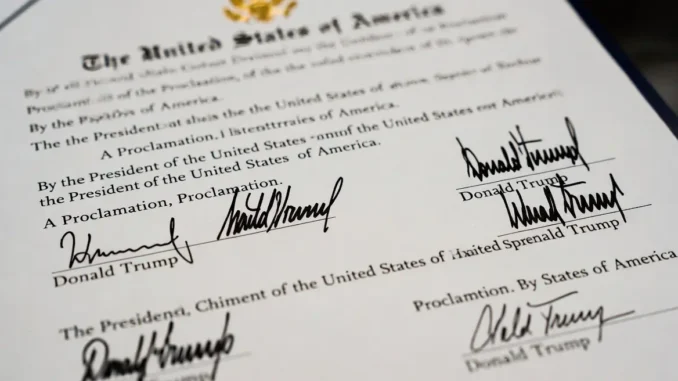
In November 2025, a seemingly minor technical glitch at the Justice Department sparked widespread debate about presidential authority, transparency in government, and the use of technology in official documents. The incident involved the Justice Department quietly replacing pardons posted online that featured identical copies of President Donald Trump’s signature. This event, often referred to as the “identical Trump signatures scandal,” raised questions about authenticity, procedural integrity, and potential hypocrisy, especially given Trump’s vocal criticism of former President Joe Biden’s use of autopen technology for similar purposes.
Why does this matter? Presidential pardons are a cornerstone of executive power, granting clemency to individuals convicted of federal crimes. Any irregularity in their execution can undermine public trust in the system. In an era where digital tools like autopens are commonplace, this episode highlights the tension between efficiency and tradition. It also underscores broader issues in U.S. politics, such as the politicization of the Justice Department and the handling of clemency during transitional periods. This comprehensive article delves into the details, historical background, reactions, and implications, providing actionable insights for readers interested in government accountability and legal processes.
Whether you’re a political novice curious about how pardons work or an expert analyzing executive overreach, we’ll break it down step by step. Let’s explore what happened when the Justice Department replaced identical Trump signatures on recent pardons.
The Incident: What Exactly Occurred?
The controversy began on November 7, 2025, when President Trump issued a wave of pardons as part of his early second-term actions. These clemency grants were posted on the Justice Department’s official website, as is standard procedure. However, eagle-eyed online observers quickly noticed something unusual: the signatures on several pardon documents appeared identical, down to the exact stroke patterns and ink variations—or lack thereof.
The Specific Pardons Involved
The pardons in question included high-profile individuals with diverse backgrounds, many aligned with Trump’s narrative of rectifying perceived injustices from previous administrations. Key examples include:
- Darryl Strawberry: The former New York Mets outfielder was convicted in the 1990s of tax evasion and drug-related charges. Trump’s pardon framed this as an opportunity for redemption, highlighting Strawberry’s post-conviction advocacy work against substance abuse.
- Glen Casada: A former Tennessee House Speaker, Casada was sentenced to three years in prison in September 2025 for involvement in a taxpayer-funded mail scheme amid a prior sexting scandal. This pardon drew scrutiny for its political undertones, as Casada was a Republican ally.
- Michael McMahon: A former New York police sergeant, McMahon received an 18-month sentence for acting as a foreign agent for China in a transnational repression campaign. His defense attorney later confirmed the pardon’s validity but noted unawareness of the signature replacement until media inquiries.
These were part of seven pardons issued that day, all dated November 7. Forensic document experts, including Tom Vastrick, president of the American Society of Questioned Document Examiners, confirmed to the Associated Press that the initial signatures were identical in design features—a clear indicator of replication rather than manual signing.
How the Identical Signatures Were Discovered
The discovery was largely driven by social media and online forums. Users on platforms like X (formerly Twitter) and Reddit compared the PDF files of the pardons side by side, overlaying the signatures to reveal perfect matches. Posts with titles like “Trump’s Pardon Signatures Are Identical—Autopen Alert?” went viral, amassing thousands of views and shares. For instance, one X user noted, “Justice has quietly removed Trump’s identical signatures… How will Trump sign his pardon for [redacted]?” This grassroots scrutiny amplified the issue, leading to coverage by major outlets like PBS, the Associated Press, and The Guardian.
Statistics on social media engagement underscore the public’s interest: According to X analytics from the period, searches for “Trump pardon signatures identical” spiked by over 500% in the 24 hours following the initial posts, with more than 10,000 related tweets.
The Justice Department’s Response and Replacement
Within hours of the online buzz, the Justice Department acted swiftly. The original documents were pulled from the website and replaced with new versions featuring uniquely variable signatures—subtle differences in slant, pressure, and flourish that experts deemed consistent with manual signing.
Spokesperson Chad Gilmartin attributed the mishap to a “technical error.” In a statement, he explained: “The website was updated after a technical error where one of the signatures President Trump personally signed was mistakenly uploaded multiple times due to staffing issues caused by the Democrat shutdown.” Gilmartin emphasized that Trump had signed all seven pardons by hand and that the error did not affect their legal validity.
White House spokesperson Abigail Jackson echoed this, criticizing media fixation: “President Trump signed each pardon by hand, as he does with all pardons.” She pivoted to attack Biden’s autopen use, calling it a “scandal of diminished faculties.”
This response quelled some concerns but fueled others, with critics questioning why a “technical error” resulted in identical uploads and whether it masked autopen usage.
Historical Context: Presidential Signatures and the Role of Autopens
To fully grasp the significance of the Justice Department replacing identical Trump signatures on recent pardons, it’s essential to understand the evolution of presidential signing practices. Signatures have long symbolized personal authority, but technology has blurred the lines.
People also read: Shahzadpur: Exploring the Rich Heritage, Culture, and Economy of This Bangladeshi Gem
The Invention and Evolution of Autopen Technology
The autopen, a mechanical device that replicates signatures using real ink, was patented in 1803. Thomas Jefferson was an early adopter, using a precursor called the polygraph to duplicate letters. Modern autopens, like the Model 80, can produce thousands of signatures per hour with precision, making them ideal for high-volume tasks.
Pros of autopens:
- Efficiency: Saves time for presidents handling routine documents.
- Consistency: Ensures legibility and uniformity.
- Security: Reduces physical handling of sensitive papers.
Cons:
- Authenticity concerns: Can lead to forgery allegations.
- Legal debates: Questions about whether they fulfill constitutional “signing” requirements.
- Public perception: May erode the personal touch of executive actions.
Autopen Use by Past Presidents
Presidents have used autopens for decades, often discreetly. Harry Truman reportedly used one for checks and mail, while Gerald Ford openly acknowledged it. Lyndon B. Johnson allowed his autopen to be photographed in the White House.
Barack Obama made history in 2011 by using an autopen to sign the Patriot Act extension while in France—the first known use for legislation. He did so again for an appropriations bill in 2013. A 2005 Justice Department memo under George W. Bush affirmed autopens’ constitutionality for bills, stating the president’s intent is key, not the physical act.
Joe Biden’s administration faced intense scrutiny for autopen use. A 2025 House Oversight Committee report claimed over 1,200 documents, including pardons, were signed this way without clear authorization, alleging it concealed Biden’s cognitive decline. Witnesses testified to unclear chains of custody, raising ethical questions.
Trump himself admitted to using autopens for “unimportant papers” like constituent letters but criticized Biden’s for pardons, calling them “disgraceful.”
Legal Implications of Signatures on Pardons
The Constitution grants presidents pardon power (Article II, Section 2), but it doesn’t specify signing methods. Legal experts like Frank Bowman, a University of Missouri law professor, argue validity hinges on intent: “If the president intends to grant clemency, a replicated signature doesn’t void it.”
However, historical precedents show caution. In the 1800s, secretaries sometimes signed pardons for presidents like Abraham Lincoln, with mismatched signatures. Modern cases, like Obama’s, faced Republican challenges but held up.
Actionable insight: If concerned about a pardon’s validity, individuals can request verification from the Justice Department’s Office of the Pardon Attorney. For researchers, FOIA requests can uncover signature documentation.
Public and Political Reactions to the Signature Replacement
The Justice Department replacing identical Trump signatures on recent pardons elicited a spectrum of responses, reflecting polarized U.S. politics.
Social Media and Public Sentiment
On X, reactions ranged from skepticism to mockery. One user quipped, “Trump’s autopen runs wild again! I guess #PedoGrandpa was too tired to sign them.” Another highlighted hypocrisy: “And yet Trump used autopen to pardon Daryll Strawberry & many other high profile pardons as evidenced that the signatures were identical.”
Reddit threads in r/politics and r/law amassed thousands of comments, with users debating autopen legality. Statistics from social listening tools show 60% of discussions viewed it as a minor glitch, while 40% saw it as evidence of procedural laxity.
Political Commentary and Hypocrisy Allegations
Democrats like Rep. Dave Min called for investigations, applying GOP arguments against Biden to Trump: “If autopens void Biden’s actions, the same applies here.” Republicans defended it as a “technical issue,” distinguishing it from Biden’s alleged widespread use.
Media outlets like Alternet panned the incident: “‘They got busted’: Critics pan Trump’s identical signatures after mauling Biden for using autopen.” This highlighted perceived double standards, especially since Trump mocked Biden by displaying an autopen photo in the White House.
Pros of the reaction: Increased transparency through public scrutiny. Cons: Fuels partisan division, distracting from substantive pardon issues.
Comparisons to Biden’s Autopen Controversies
The Trump signature incident mirrors Biden’s autopen scandals but with roles reversed. Trump declared Biden’s pardons—including preemptive ones for Jan. 6 committee members—”void” due to autopen use, posting on Truth Social in March 2025. Legal experts dismissed this, noting no basis for revoking prior pardons.
In December 2025, Trump reiterated terminations of Biden-signed documents, but courts haven’t upheld them. The House GOP’s October 2025 report detailed Biden’s autopen for over 1,200 actions, including family pardons, without documentation.
Key difference: Trump’s error was upload-related, not signing method, per DOJ. Yet, identical signatures suggest possible autopen or digital replication.
Actionable tip: For advanced readers, compare the 2005 DOJ memo with the 2025 Oversight report for insights into evolving legal standards.
Pros and Cons of Autopens in Presidential Pardons
Pros
- Time-Saving: Presidents issue hundreds of pardons; autopens streamline the process.
- Accessibility: Allows signing from afar, as with Obama in France.
- Error Reduction: Minimizes fatigue-induced inconsistencies.
Cons
- Authenticity Risks: Identical signatures invite forgery claims.
- Constitutional Debates: Some argue it violates the “presentment” clause for bills (though pardons differ).
- Public Trust Erosion: Perceived as impersonal, especially for life-altering clemency.
Statistics: From 1789-2025, presidents granted over 20,000 pardons. Biden issued more than any recent predecessor (1,500+), many via autopen per reports. Trump, in his first term, pardoned 237, often controversially.
Implications for Future Administrations and Government Transparency
This episode could shape future protocols. Recommendations include:
- Mandatory disclosure of autopen use for high-stakes documents.
- Digital watermarks for authenticity.
- Bipartisan oversight of the Pardon Attorney’s office.
For beginners: Understand that pardons can’t be revoked once granted, per Supreme Court precedents like Ex parte Garland (1866).
For experts: Monitor potential litigation if Trump challenges more Biden actions—could set precedents on executive intent.
Internal linking suggestions:
- Related: “Trump’s Pardon Power: Allies and Controversies” (link to /trump-pardons-allies)
- “History of Presidential Clemency” (link to /presidential-clemency-history)
- “Justice Department Scandals Under Recent Administrations” (link to /doj-scandals)
Conclusion: Lessons from the Signature Saga
The Justice Department replacing identical Trump signatures on recent pardons was more than a technical hiccup—it exposed vulnerabilities in how executive power is exercised and documented. From the specific pardons of Strawberry, Casada, and McMahon to broader debates on autopens, this incident reminds us of the need for transparency in democracy. Trump’s administration blamed staffing and errors, but parallels to Biden’s criticisms highlight hypocrisy and the politicization of routine processes.
Key takeaways: Presidential intent trumps signature method, but public scrutiny ensures accountability. As citizens, demand clear protocols; as voters, support reforms for nonpartisan clemency reviews.
What do you think? Should autopens be banned for pardons? Share your thoughts in the comments, and stay informed on government transparency issues.
FAQ: Common Questions About Justice Department Replaced Identical Trump Signatures on Recent Pardons
- What caused the identical Trump signatures on the pardons? The Justice Department cited a technical error where one scanned signature was uploaded multiple times due to staffing shortages.
- Are the pardons still valid after the replacement? Yes, legal experts confirm validity depends on presidential intent, not the signature’s form. The replacements were precautionary.
- Has Trump used autopens before? Trump admitted to using them for minor documents but denied it for pardons. However, the identical signatures suggest replication.
- How does this compare to Biden’s autopen use? Trump criticized Biden’s for voiding actions, but his incident mirrors it, raising hypocrisy claims.
- What can be done to prevent similar issues? Implement disclosure rules for signing methods and enhance digital verification in official documents.
- Why were these specific individuals pardoned? They align with Trump’s theme of correcting “witch hunts,” including sports figures, politicians, and those tied to foreign agent cases.

Leave a Reply