
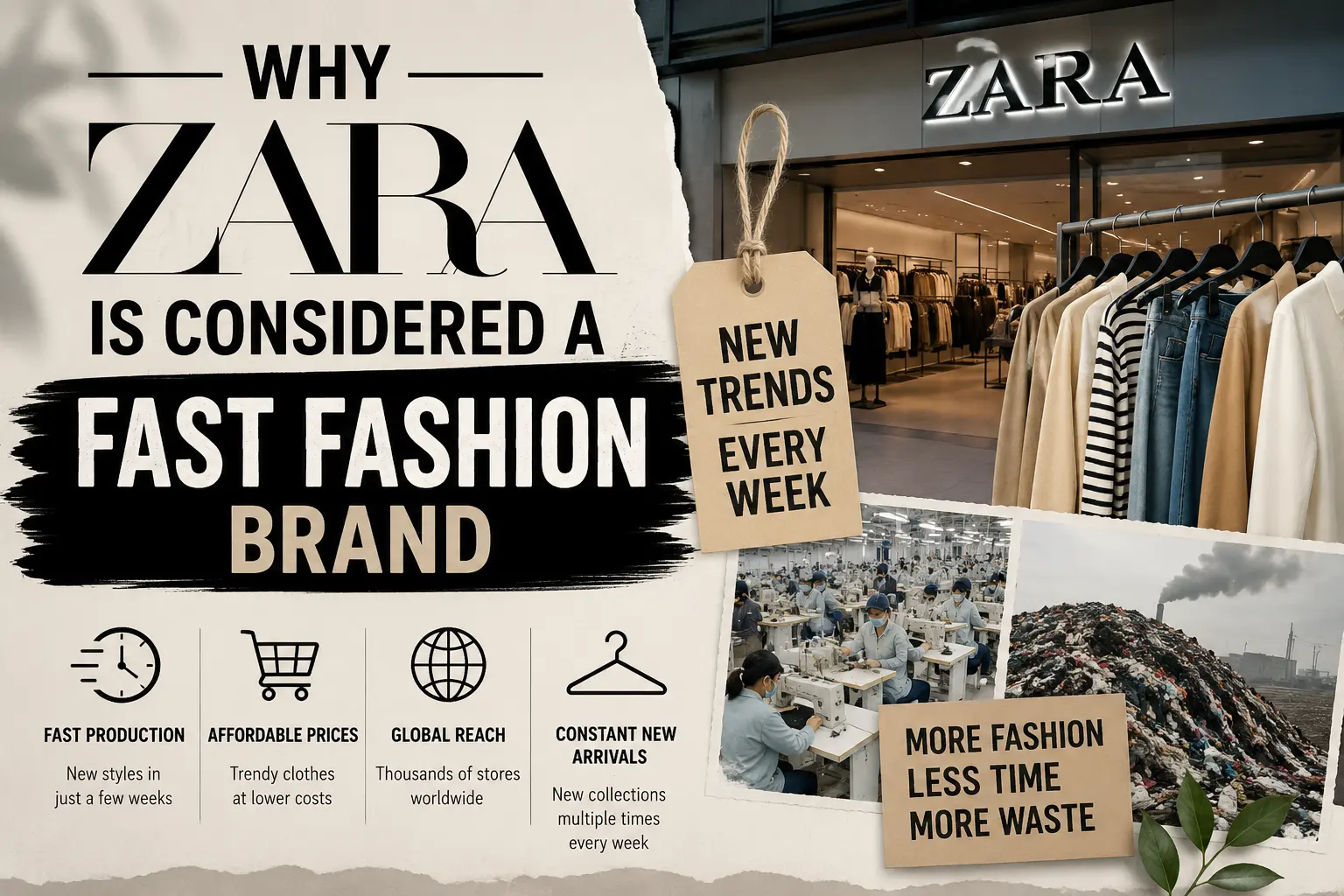
Fashion trends change faster today than ever before. One week everyone is wearing oversized blazers, and the next week cargo pants or minimalist basics are everywhere. Many people want stylish clothes at affordable prices, and brands like Zara have become incredibly popular because they deliver trendy outfits quickly and at lower prices.
But there is a growing conversation around fast fashion and its impact on the environment, workers, and consumers. Many shoppers now ask an important question: Is Zara fast fashion?
The simple answer is yes. Zara is considered one of the biggest fast fashion brands in the world. In fact, the company helped shape the modern fast fashion industry that we know today.
Still, there is more to the story. Zara also promotes sustainability programs, produces smaller product batches than many competitors, and tries to react quickly to customer demand instead of producing huge seasonal collections months in advance.
This guide explains everything in very simple words. You will learn what fast fashion means, how Zara operates, why people criticize the brand, how it affects the environment, and what alternatives you can choose if you want a more sustainable wardrobe.
What Is Fast Fashion?
Fast fashion is a clothing business model focused on making trendy clothes very quickly and selling them at affordable prices.
The goal is simple:
- Notice fashion trends fast
- Produce clothes quickly
- Sell them cheaply
- Encourage people to keep buying new styles
Fast fashion works almost like fast food. Instead of waiting months for new collections, shoppers see fresh designs every week.
Traditional fashion brands used to launch only a few collections per year, usually based on seasons like spring, summer, fall, and winter. Fast fashion changed that system completely.
Today, brands release new styles constantly to keep shoppers interested and coming back for more.
Main Features of Fast Fashion
Very Fast Production
Fast fashion brands can take a design idea and place it in stores within a few weeks.
Traditional fashion companies may need four to six months. Fast fashion brands move much faster.
Cheap Prices
Fast fashion clothing is designed to be affordable for a large number of customers.
This allows shoppers to buy trendy clothes without spending luxury-level prices.
Constant New Arrivals
New products appear in stores almost every week. This creates excitement and makes customers feel they might miss out if they wait too long.
Trend-Based Designs
Fast fashion brands closely follow:
- Celebrity outfits
- Social media influencers
- Fashion week runways
- Viral TikTok trends
- Street style trends
Then they quickly create similar versions for regular shoppers.
Short Clothing Lifespan
Many fast fashion pieces are not designed to last for years. The quality is often lower than premium brands, encouraging frequent replacement.
The History of Zara
Zara was founded in Spain in 1975 by Amancio Ortega.
The original idea behind the company was simple but powerful: provide fashionable clothing at prices ordinary people could afford.
Over time, Zara expanded rapidly across Europe, America, Asia, and many other parts of the world. Today, it operates thousands of stores globally and is owned by the company Inditex.
Unlike many older fashion companies, Zara built a unique business model focused on speed and flexibility.
How Zara’s Business Model Works
Zara became successful because it changed the way fashion brands operate.
Instead of designing clothes months in advance, Zara reacts to trends almost instantly.
Vertical Integration
One major reason Zara moves so quickly is something called vertical integration.
This means Zara controls many parts of its own production system instead of depending completely on outside suppliers.
The company handles:
- Design
- Production
- Distribution
- Shipping
- Retail stores
Because Zara controls so much of the process, it can move faster than traditional fashion brands.
Small Production Batches
Many clothing brands produce huge amounts of inventory.
Zara often produces smaller batches instead.
This strategy helps the company:
- Reduce unsold inventory
- Create urgency among shoppers
- Test trends quickly
- Change designs fast if products fail
When shoppers know an item may disappear next week, they are more likely to buy immediately.
Real-Time Customer Feedback
Store managers regularly send information back to Zara headquarters about:
- What customers buy most
- Which sizes sell quickly
- What colors people ask for
- Which products are ignored
Design teams then adjust future production based on real customer behavior.
This data-driven system is one reason Zara became famous worldwide.
Is Zara Fast Fashion?
Yes, Zara is definitely a fast fashion brand.
The company matches almost every major feature associated with fast fashion.
Zara Produces Clothes Extremely Fast
One of the biggest reasons Zara is called fast fashion is speed.
Traditional fashion brands may take several months to release new collections. Zara can design, produce, and deliver new items to stores in around two weeks.
That speed is one of the fastest in the global fashion industry.
This rapid production cycle allows Zara to react instantly to trends.
For example, if oversized coats become popular on social media today, Zara can quickly create similar styles and place them in stores before the trend fades.
Zara Constantly Releases New Products
Many Zara stores receive fresh inventory multiple times every week.
Customers often visit regularly because they know new styles appear constantly.
This creates a feeling of urgency called “scarcity marketing.”
People feel pressured to buy quickly because the product may disappear soon.
This shopping behavior is a major part of the fast fashion industry.
Zara Follows Runway and Celebrity Trends
Zara is known for taking inspiration from luxury fashion trends.
When designer brands showcase expensive collections during fashion weeks, Zara often creates more affordable versions shortly afterward.
For example:
- Luxury designer blazer: $900
- Zara-inspired version: $70
This gives average shoppers access to trendy styles at lower prices.
However, critics say this system encourages overconsumption and copies original designers too closely.
Zara Prioritizes Speed Over Longevity
Fast fashion focuses heavily on trend cycles rather than long-lasting wardrobes.
Some Zara pieces are stylish and well-made, but many items are designed mainly for short-term trends instead of years of use.
As fashion changes quickly, customers are encouraged to keep buying newer items.
This cycle increases clothing waste globally.
Zara Uses Global Supply Chains for Quick Delivery
Zara manufactures many products near Europe in countries such as:
- Spain
- Portugal
- Morocco
- Turkey
Producing closer to headquarters helps the company restock stores quickly.
Zara also uses advanced logistics systems and rapid shipping methods to maintain fast delivery schedules worldwide.
Why Zara Became So Popular
Even with criticism, Zara remains one of the most successful fashion companies in the world.
There are several reasons people continue shopping there.
Affordable Trendy Clothing
Many people cannot afford luxury designer brands.
Zara gives shoppers a way to wear fashionable styles at lower prices.
The clothes often look modern, stylish, and inspired by current fashion trends.
Constant Variety
Every store visit feels different because products change frequently.
This keeps shopping exciting for customers.
Fashionable Store Design
Zara stores usually look modern and premium compared to many other fast fashion retailers.
This creates a more upscale shopping experience.
Quick Response to Trends
Zara is extremely fast at adapting to fashion trends.
The company often releases products while trends are still popular rather than months later.
The Environmental Impact of Zara and Fast Fashion
One of the biggest concerns about fast fashion is environmental damage.
The fashion industry is now considered one of the largest polluting industries in the world.
Fast fashion contributes heavily to this problem.
Massive Clothing Waste
Millions of tons of clothing are thrown away every year.
Many garments end up in:
- Landfills
- Garbage dumps
- Incinerators
A shocking amount of clothing is never even sold before being discarded.
Fast fashion encourages people to buy more clothes than they truly need.
Short Clothing Lifespans
Many fast fashion items are worn only a few times before being thrown away.
Some studies show the average garment may only be worn around seven to ten times before disposal.
This creates enormous waste globally.
Water Consumption
Clothing production requires huge amounts of water.
For example, producing one cotton T-shirt may use around 2,700 liters of water.
That is enough drinking water for one person for several years.
Cotton farming also uses pesticides and chemicals that can harm ecosystems.
Carbon Emissions
The fashion industry creates major greenhouse gas emissions through:
- Manufacturing
- Transportation
- Shipping
- Synthetic fabric production
- Waste disposal
Fast fashion brands move products around the world constantly, increasing pollution levels.
Synthetic Fabrics and Microplastics
Many fast fashion garments contain polyester and other synthetic materials.
When washed, these fabrics release microplastics into oceans and waterways.
Microplastics are tiny plastic particles that harm marine life and enter the food chain.
Zara’s Sustainability Efforts
In recent years, Zara and its parent company Inditex have launched several sustainability initiatives.
The company says it wants to reduce environmental impact and improve ethical practices.
However, critics debate whether these efforts are enough.
Clothing Recycling Programs
Some Zara stores include clothing collection boxes where customers can donate unwanted garments.
These clothes may be:
- Reused
- Recycled
- Donated
The goal is to reduce textile waste.
Sustainable Fabric Goals
Zara has promised to increase the use of:
- Organic cotton
- Recycled materials
- More sustainable fibers
The company has also promoted collections labeled as environmentally conscious.
Renewable Energy and Packaging Changes
Inditex has announced plans related to:
- Renewable energy use
- Reduced plastic packaging
- Lower emissions
These efforts are part of broader sustainability targets.
Criticism of Zara’s Sustainability Claims
Many environmental activists believe Zara’s sustainability programs do not solve the core problem.
The biggest criticism is simple:
A company cannot truly become sustainable while producing massive amounts of new clothing every week.
Critics argue that overproduction itself is the main issue.
Some people also accuse large fast fashion brands of “greenwashing.”
Greenwashing happens when companies market themselves as environmentally friendly without making major meaningful changes.
Labor Issues and Worker Conditions
Another major criticism of fast fashion involves labor practices.
Cheap clothing often depends on low-cost labor.
Factory workers in some countries may face:
- Low wages
- Unsafe working conditions
- Long working hours
- Poor worker protections
Zara and Labor Controversies
Zara has faced criticism regarding supplier factories in the past.
One well-known incident happened in Turkey in 2017 when garment workers reportedly left messages inside clothing items asking customers for support regarding unpaid wages.
The story gained international attention and raised concerns about labor rights within fashion supply chains.
Supplier Audits and Codes of Conduct
Inditex says it uses:
- Supplier inspections
- Ethical standards
- Factory audits
- Worker protection policies
However, labor rights organizations argue that enforcement can sometimes be inconsistent across global supply chains.
Animal Welfare Concerns
Fast fashion also affects animals.
Some fashion brands use materials such as:
- Leather
- Wool
- Fur
- Down feathers
Animal rights groups often ask companies to provide more transparency about where these materials come from.
Zara’s Animal Welfare Policies
Zara has taken some steps regarding animal-related materials.
The company has:
- Banned angora fur
- Introduced some traceability standards
- Announced goals for certified wool sourcing
Still, animal welfare organizations continue requesting stronger protections and more transparency.
Why Fast Fashion Is So Addictive
Fast fashion shopping is carefully designed to encourage repeat purchases.
Many people buy more clothing than they actually need because of psychological marketing techniques.
Fear of Missing Out
Limited inventory creates urgency.
Customers worry products may sell out quickly, so they buy immediately instead of thinking carefully.
Cheap Prices Encourage Impulse Buying
When clothing feels inexpensive, shoppers often buy more items without planning.
Buying a $20 jacket feels easier than buying a $200 jacket, even if the cheaper item may not last long.
Social Media Pressure
Platforms like Instagram and TikTok constantly promote new outfit trends.
Many people feel pressure to avoid repeating outfits online.
Fast fashion feeds this culture by providing endless new styles.
Is Zara Better Than Other Fast Fashion Brands?
Some people argue Zara is slightly better than ultra-cheap fast fashion companies because:
- It produces smaller batches
- Some products have better quality
- It uses nearby manufacturing for speed
- It invests in certain sustainability programs
However, Zara is still fundamentally a fast fashion brand because its business model depends on rapid production and constant consumption.
So while Zara may differ slightly from brands known for ultra-low-cost mass production, it still contributes to many of the same environmental and ethical concerns.
Better Alternatives to Fast Fashion
If you want a more sustainable wardrobe, there are many good alternatives.
You do not need to become perfect overnight. Even small shopping changes can make a difference.
Buy Fewer, Better Clothes
Instead of purchasing many cheap trendy items, consider investing in fewer high-quality pieces.
Well-made clothing often lasts longer and saves money over time.
Shop Secondhand
Secondhand shopping is one of the best ways to reduce fashion waste.
You can shop through:
- Thrift stores
- Vintage shops
- Clothing resale apps
- Online marketplaces
Buying used clothing extends the life of garments already produced.
Support Sustainable Fashion Brands
Some companies focus more on:
- Ethical labor practices
- Eco-friendly fabrics
- Durable clothing
- Responsible production
Popular sustainable fashion brands include:
- Patagonia
- Eileen Fisher
- People Tree
- Girlfriend Collective
These brands often cost more, but many focus on quality and long-term wear.
Build a Capsule Wardrobe
A capsule wardrobe means owning fewer clothes that mix and match easily.
This reduces unnecessary shopping while making daily outfit choices simpler.
Take Better Care of Clothes
Simple habits can help clothes last longer:
- Wash clothes carefully
- Avoid overwashing
- Repair small damage
- Store garments properly
- Follow care labels
Even extending clothing life by a few extra months can reduce environmental impact.
Can You Shop at Zara Responsibly?
Some people completely avoid fast fashion. Others still shop there occasionally but try to do so more responsibly.
If you choose to shop at Zara, consider these tips:
Buy Only What You Truly Need
Avoid impulse purchases.
Think carefully before buying trendy pieces you may wear only once or twice.
Focus on Timeless Styles
Choose classic clothing that stays useful for years instead of short-lived trends.
Check Fabric Quality
Natural fibers and stronger materials may last longer than very cheap synthetic fabrics.
Wear Clothes Many Times
The more often you wear an item, the lower its environmental impact per use.
Donate or Resell Unwanted Clothes
Instead of throwing garments away, consider:
- Donating
- Reselling
- Recycling
- Swapping with friends
The Future of Fashion
The fashion industry is slowly changing as more consumers become aware of environmental and ethical issues.
Many shoppers now ask questions like:
- Who made my clothes?
- How sustainable is this brand?
- Will this item last?
- Do I really need this purchase?
Brands are facing growing pressure to become more transparent and responsible.
At the same time, consumers also play an important role through their shopping habits.
Final Thoughts
Yes, Zara is a fast fashion brand.
The company became famous because of its ability to produce trendy clothing quickly, respond rapidly to fashion trends, and offer stylish designs at affordable prices.
Zara helped transform the global fashion industry and influenced how millions of people shop today.
However, fast fashion also creates serious concerns related to:
- Environmental pollution
- Clothing waste
- Carbon emissions
- Water usage
- Labor conditions
- Overconsumption
Zara has introduced sustainability programs and ethical initiatives, but many critics believe the company still contributes heavily to the core problems of fast fashion.
The good news is that shoppers have more choices today than ever before.
You can:
- Buy fewer clothes
- Shop secondhand
- Support sustainable brands
- Build a timeless wardrobe
- Take better care of garments
Fashion does not need to be perfect. Even small changes can make a meaningful difference over time.
The most important thing is making informed choices and understanding the true impact behind the clothes we buy.
Frequently Asked Questions
Is Zara considered a fast fashion company?
Yes, Zara is widely considered a fast fashion brand because it produces trendy clothing quickly, releases new collections frequently, and sells fashion at relatively affordable prices.
Why is Zara called fast fashion?
Zara is called fast fashion because it can design, produce, and deliver new clothing styles to stores within a few weeks instead of several months.
Is Zara sustainable?
Zara has introduced sustainability initiatives like clothing recycling programs and recycled fabric goals. However, many critics believe the company is still not fully sustainable because of its large-scale production model.
Does Zara use ethical labor practices?
Zara says it follows supplier standards and factory audits, but the company has faced criticism over labor conditions in parts of its supply chain.
Is Zara better than Shein?
Some shoppers believe Zara offers slightly better quality and sustainability efforts compared to ultra-fast fashion brands like SHEIN. However, both companies are still considered fast fashion brands.
What are good alternatives to Zara?
Popular alternatives include:
- Secondhand clothing
- Patagonia
- People Tree
- Eileen Fisher
- Girlfriend Collective
How can I avoid supporting fast fashion?
You can reduce fast fashion shopping by:
- Buying fewer clothes
- Choosing quality over quantity
- Shopping secondhand
- Supporting sustainable brands
- Wearing clothes for longer periods
Why is fast fashion bad for the environment?
Fast fashion contributes to pollution through overproduction, water waste, carbon emissions, textile waste, and synthetic fabric pollution such as microplastics.

Be First to Comment