
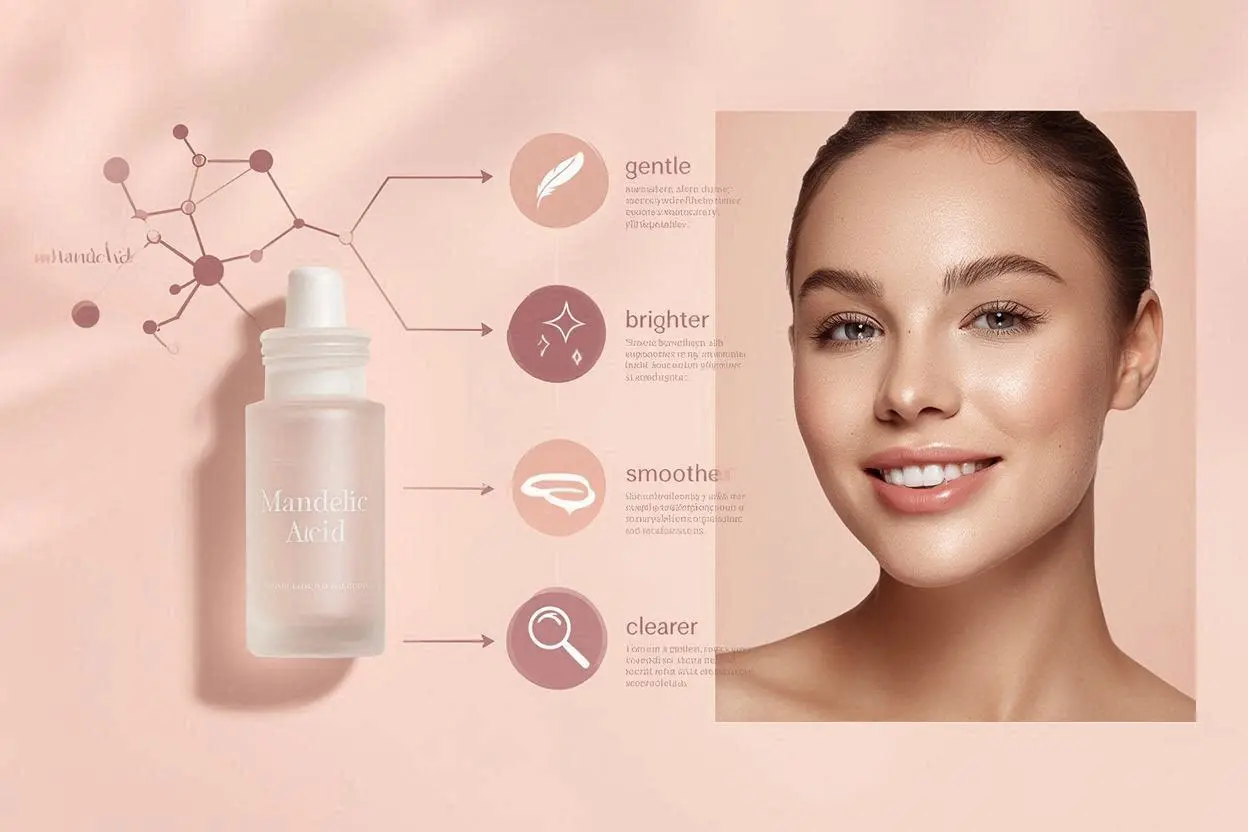
If you’ve been exploring skincare ingredients lately, you’ve probably come across mandelic acid more than once. It’s quietly becoming one of the most recommended acids by dermatologists—and for good reason.
Unlike many strong exfoliating acids that can sting or irritate the skin, mandelic acid is known for being gentle, slow-acting, and suitable for almost all skin types, especially sensitive and acne-prone skin.
Derived from bitter almonds, mandelic acid belongs to the alpha hydroxy acid (AHA) family. It helps improve skin texture, reduce breakouts, fade dark spots, and support a more even complexion—without overwhelming the skin barrier.
In this complete guide, you’ll learn everything about mandelic acid, including how it works, its benefits, how to use it safely, comparisons with other acids.
What Is Mandelic Acid?
Mandelic acid is a type of alpha hydroxy acid (AHA) extracted from bitter almonds. It is used in skincare for its ability to gently exfoliate the skin and improve multiple skin concerns at once.
What makes it different from other acids is its larger molecular size. This means it penetrates the skin slowly and evenly instead of going deep too quickly. As a result, it causes less irritation and redness compared to stronger acids like glycolic acid.
In simple words:
Mandelic acid helps your skin shed dead cells, unclog pores, and renew itself—without being too harsh.
How Does Mandelic Acid Work on the Skin?
To understand its benefits, it helps to know how mandelic acid actually works:
1. Gentle Exfoliation
It removes dead skin cells sitting on the surface of your skin, revealing fresh and smoother skin underneath.
2. Pore Cleansing
It helps clear out clogged pores, reducing blackheads and whiteheads.
3. Skin Renewal
It supports faster cell turnover, which helps fade marks and dullness.
4. Antibacterial Action
It helps fight acne-causing bacteria, making it useful for breakouts.
5. Collagen Support
It encourages collagen production, which improves firmness and reduces fine lines.
Mandelic Acid Benefits for Skin
Now let’s break down the real reason this ingredient is so popular.
1. Gentle Exfoliation Without Irritation
One of the biggest advantages of mandelic acid is that it is extremely gentle on the skin.
Unlike glycolic acid, which can cause burning or redness, mandelic acid works slowly and steadily. This makes it ideal for:
- Sensitive skin
- Beginners in chemical exfoliation
- People who cannot tolerate strong acids
You get smoother skin without the uncomfortable side effects.
2. Helps Treat Acne and Breakouts
Mandelic acid is highly effective for acne-prone skin because it works in multiple ways:
- Unclogs pores
- Reduces excess oil
- Fights acne bacteria
- Prevents future breakouts
It also helps reduce the marks left behind after acne heals, which is often the biggest concern for many people.
3. Fades Dark Spots and Hyperpigmentation
Dark spots, sun damage, and post-acne marks can take a long time to fade. Mandelic acid helps speed up this process by increasing skin cell turnover.
It is especially helpful for:
- Acne scars
- Sun spots
- Uneven skin tone
- Melasma (in some cases under dermatologist guidance)
Because it is gentle, it is considered safer for darker skin tones, where stronger acids can sometimes cause further pigmentation issues.
4. Improves Skin Texture and Smoothness
If your skin feels rough, bumpy, or uneven, mandelic acid can help refine it over time.
It removes dead skin buildup, allowing fresh skin to surface. With consistent use, your skin becomes:
- Softer
- Smoother
- More polished
- Visibly healthier
5. Reduces Fine Lines and Early Signs of Aging
Mandelic acid supports collagen production, which helps improve skin elasticity.
Over time, it can:
- Soften fine lines
- Improve firmness
- Reduce dullness
- Make skin appear more youthful
It won’t replace anti-aging treatments, but it can be a strong supporting ingredient.
6. Suitable for All Skin Tones
One of the most important benefits of mandelic acid is that it is safe for all skin tones, including:
- Fair skin
- Medium skin
- Deep skin tones
Unlike stronger acids that may trigger post-inflammatory hyperpigmentation, mandelic acid works gently and reduces that risk.
Read also French Tip Nail Ideas: 33 Styles for Every Occasion.
Who Should Use Mandelic Acid?
Mandelic acid is suitable for a wide range of skin types:
Best for:
- Sensitive skin
- Acne-prone skin
- Oily skin
- Combination skin
- Skin with dark spots or pigmentation
Also helpful for:
- Beginners in skincare acids
- People who had bad reactions to glycolic acid
- Those looking for mild anti-aging support
How to Use Mandelic Acid in Your Skincare Routine
Using mandelic acid correctly is very important for good results.
Step-by-Step Routine
Step 1: Cleanse your skin
Use a gentle face wash to remove dirt and oil.
Step 2: Apply mandelic acid product
You can use:
- Serum
- Toner
- Lightweight treatment
Apply a small amount on dry skin.
Step 3: Moisturize
Always follow with a moisturizer to protect your skin barrier.
Step 4: Sunscreen (very important)
Use SPF 30 or higher every morning.
How Often Should You Use It?
- Beginners: 1–2 times per week
- Intermediate users: 2–4 times per week
- Advanced users: As tolerated (daily in some cases)
Do not rush—slow introduction is key.
Mandelic Acid Peel: Before and After Results
A mandelic acid peel is a professional treatment with stronger concentration (usually 20–40%).
What Happens During a Peel?
- Skin is cleansed
- Acid is applied for a few minutes
- Mild tingling may occur
- Neutralized and removed
After Effects Timeline
First 1–3 days:
Mild redness and sensitivity
Days 3–7:
Light peeling or flaking
Week 2:
Clearer, smoother skin appears
After multiple sessions:
- Reduced acne scars
- Faded pigmentation
- Brighter skin tone
- Improved texture
Usually 3–6 sessions are recommended for best results.
Mandelic Acid vs Other Acids
| Ingredient | Strength | Best For | Irritation Level |
|---|---|---|---|
| Mandelic Acid | Gentle | Sensitive, acne, pigmentation | Low |
| Glycolic Acid | Strong | Deep wrinkles, dull skin | High |
| Salicylic Acid | Oil-soluble | Blackheads, oily skin | Medium |
| Lactic Acid | Mild | Dry skin, hydration | Low |
When Should You Choose Mandelic Acid?
Choose mandelic acid if:
- Your skin is sensitive
- You experience irritation easily
- You want gentle but effective results
- You are new to acids
- You struggle with acne + dark spots together
Can You Mix Mandelic Acid With Other Ingredients?
Be careful when combining actives.
Avoid using together:
- Retinol (same routine)
- Glycolic acid
- Strong exfoliants
Safe combinations:
- Hyaluronic acid
- Niacinamide
- Ceramides
- Gentle moisturizers
Possible Side Effects
Although mild, some users may experience:
- Slight dryness
- Mild redness
- Temporary peeling
- Sensitivity to sun
These usually happen if overused or not paired with moisturizer and SPF.
Tips for Best Results
- Start slowly
- Always use sunscreen
- Moisturize daily
- Don’t over-exfoliate
- Be consistent for 6–8 weeks
Final Thoughts
Mandelic acid is one of the most beginner-friendly and skin-friendly exfoliating acids available today. It offers a balanced combination of gentle exfoliation, acne control, pigmentation fading, and texture improvement without the harsh side effects of stronger acids.
If you’ve struggled with irritation from other skincare actives, mandelic acid can be a game-changer. The key is consistency, patience, and proper sun protection.
Healthy skin is not about using the strongest product—it’s about using the right ingredient in the right way.
Frequently Asked Questions
1. Is mandelic acid safe for daily use?
Yes, but only after your skin builds tolerance. Beginners should start slowly.
2. Can mandelic acid remove acne scars?
It can fade mild acne scars and dark spots, but deep scars may need professional treatment.
3. Is mandelic acid better than glycolic acid?
For sensitive skin, yes. For fast strong results, glycolic acid may be stronger but harsher.
4. Can I use mandelic acid with vitamin C?
Yes, but not in the same routine if your skin is sensitive. Use them at different times of day.
5. How long does mandelic acid take to work?
You may see improvements in 2–4 weeks, but full results usually take 6–8 weeks.
6. Can teenagers use mandelic acid?
Yes, especially for acne, but it’s best to start with low concentration and mild usage.



Be First to Comment